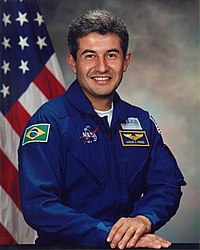
Marcos Pontes
Brazilian - (AEB)
Active
Date of Birth: March 11, 1963
Age: 63
Marcos Cesar Pontes (born March 11, 1963) is a Brazilian Air Force pilot, engineer, AEB astronaut and author. He became the first South American and the first Lusophone to go into space when he launched into the International Space Station aboard Soyuz TMA-8 on March 30, 2006. He is the only Brazilian to have completed the NASA astronaut training program, although he switched to training in Russia after NASA's Space Shuttle program encountered problems.
Soyuz-FG | Soyuz TMA-7
Progress Rocket Space Center | RussiaBaikonur Cosmodrome, Republic of Kazakhstan
Oct. 1, 2005, 3:54 a.m.
Status: Success
Mission:
Soyuz TMA-7 begins Expedition 12 by carrying 3 astronauts and cosmonauts to the International Space Station. Russian Commander, cosmonaut Valery Tokarev alongside Flight Engineers, William McArthur (NASA) & spaceflight participant Gregory Olsen (Space Adventures) will launch aboard the Soyuz spacecraft from the Baikonur Cosmodrome in Kazakhstan and then rendezvous with the station. It landed on April 8, 2006, 23:48:00 UTC
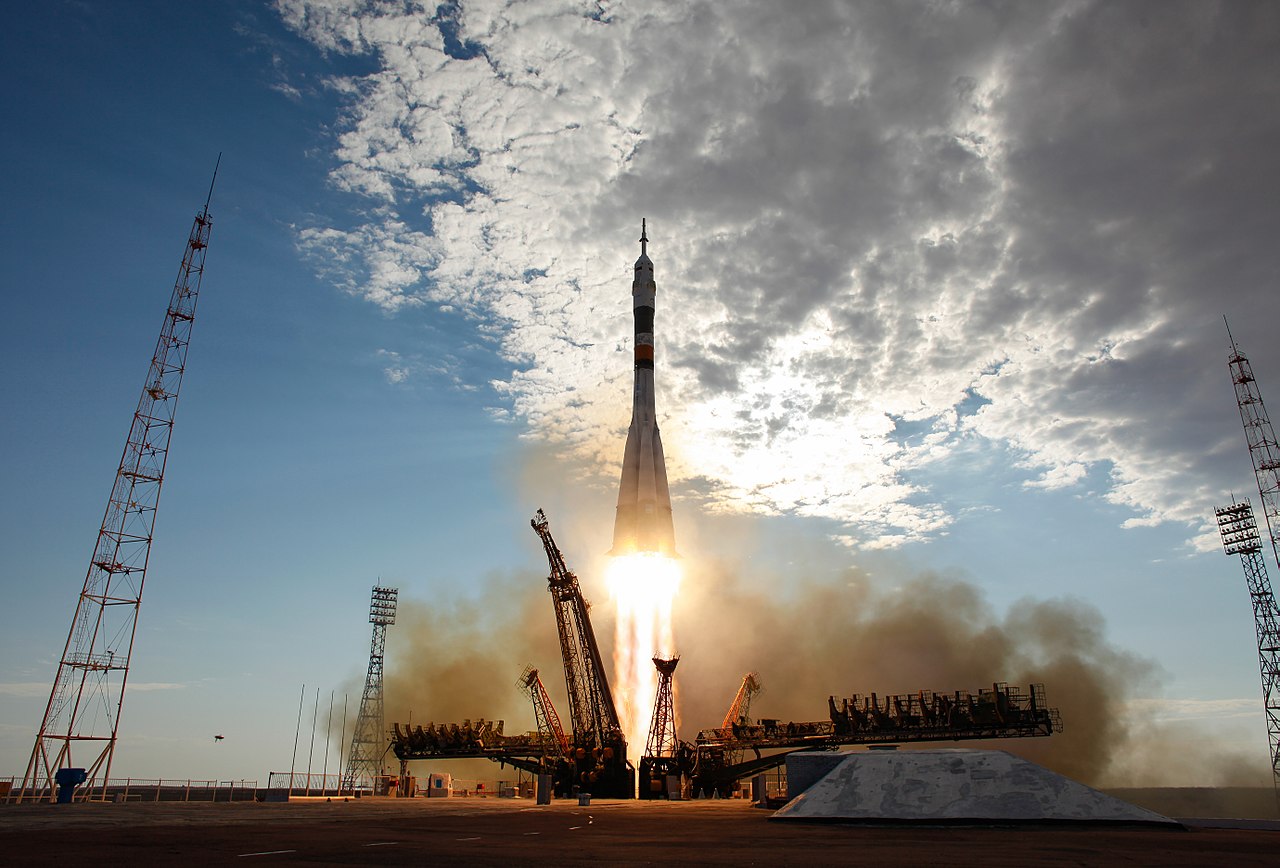
Low Earth OrbitSoyuz-FG | Soyuz TMA-8
Progress Rocket Space Center | RussiaBaikonur Cosmodrome, Republic of Kazakhstan
March 30, 2006, 2:30 a.m.
Status: Success
Mission:
Soyuz TMA-8 begins Expedition 13 by carrying 3 astronauts and cosmonauts to the International Space Station. Russian Commander, cosmonaut Pavel Vinogradov alongside Flight Engineers, Jeffrey Williams (NASA) & spaceflight participant Marcos Pontes (Space Adventures) will launch aboard the Soyuz spacecraft from the Baikonur Cosmodrome in Kazakhstan and then rendezvous with the station. It landed on September 29, 2006, 01:13 UTC
Low Earth OrbitThe Brazilian Space Agency is a space agency in South America. They work in partnership with the US and Russia aboard the ISS. It was previously operated by the military until 1994. They now operate largely in tandem with other nations. They run a spaceport and rocket launch site both in Brazil. They built the VLM small satellite launch system in tandem with Germany. The VLS-1 was intended to be a primary launch vehicle for the BSA, but it failed 3 times and was canceled. They have restarted work on the system in tandem with the Russian Space Agency.
Falcon 9
Starlink Group 17-22
Space Launch Complex 4E - Vandenberg SFB, CA, USAA batch of 25 satellites for the Starlink mega-constellation - SpaceX's project for space-based Internet communication system.
New Glenn
BlueBird Block 2 #2
Launch Complex 36A - Cape Canaveral SFS, FL, USAAST SpaceMobile’s Block 2 BlueBird satellites are designed to deliver up to 10 times the bandwidth capacity of the BlueBird Block 1 satellites, requi…
Long March 4C
Daqi-2 (AEMS)
Launch Area 94 (SLS-2 / 603) - Jiuquan Satellite Launch Center, People's Republic of ChinaDaqi-2 (DQ-2), also known as the Atmospheric Environment Monitoring Satellite/AEMS, is the second of follow-on series of Chinese satellites to the GF…
Soyuz 2.1b/Volga
Kosmos (Unknown Payload)
43/4 (43R) - Plesetsk Cosmodrome, Russian FederationUnknown satellite(s) for the Russian military.
Falcon 9
Starlink Group 17-27
Space Launch Complex 4E - Vandenberg SFB, CA, USAA batch of 25 satellites for the Starlink mega-constellation - SpaceX's project for space-based Internet communication system.

