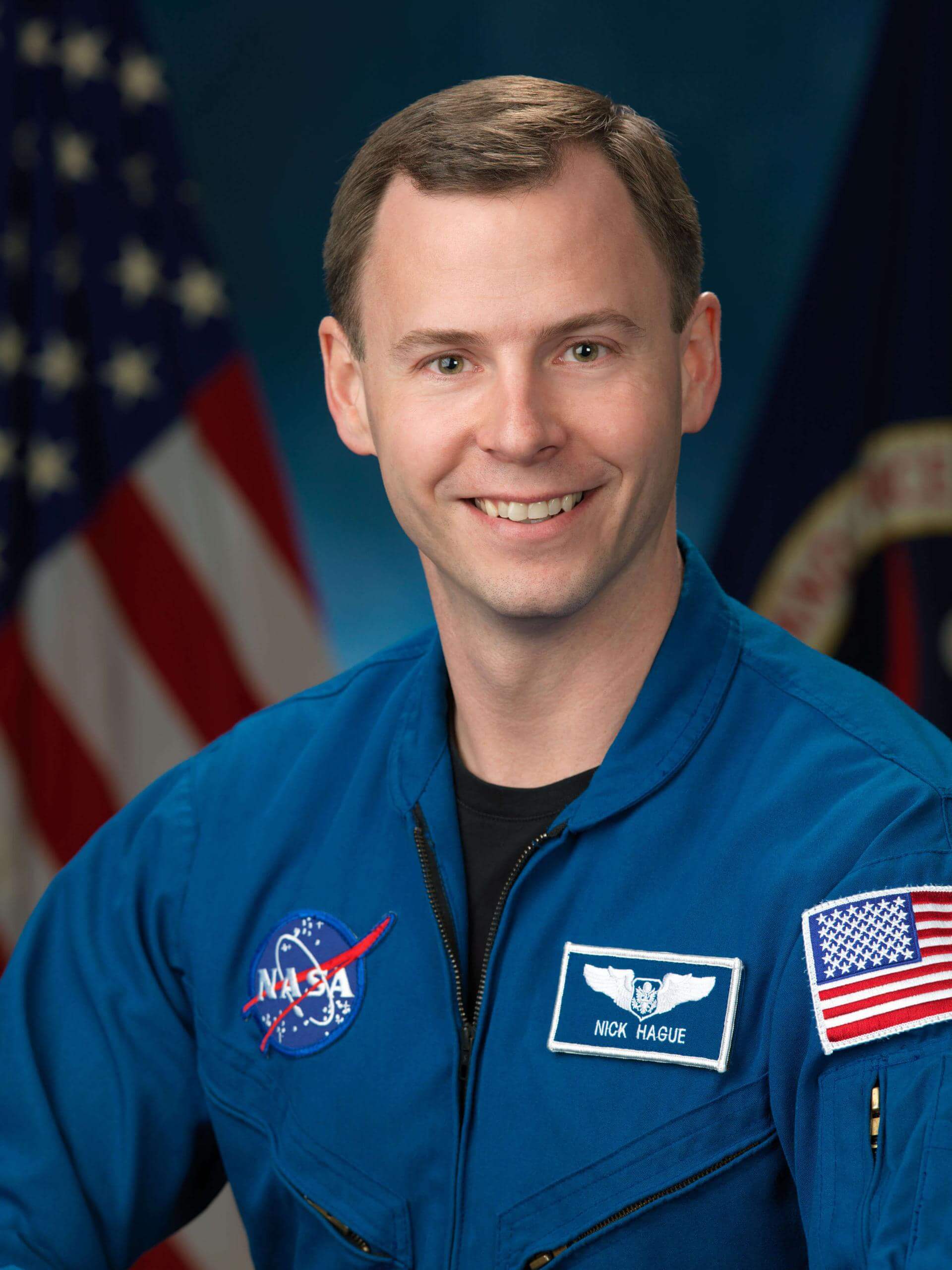
Nick Hague
American - (NASA)
Retired
Date of Birth: Sept. 24, 1975
Age: 50
Tyler Nicklaus Hague is a retired American Flight Test Engineer and NASA astronaut of the class of 2013. Selected to be a flight engineer of Expedition 57 / 58 to the International Space Station, he launched on board Soyuz MS-10, which aborted shortly after launch on October 11, 2018. He flew again on Soyuz MS-12 and SpaceX Crew-9, completing two stays and four spacewalks at the International Space Station.
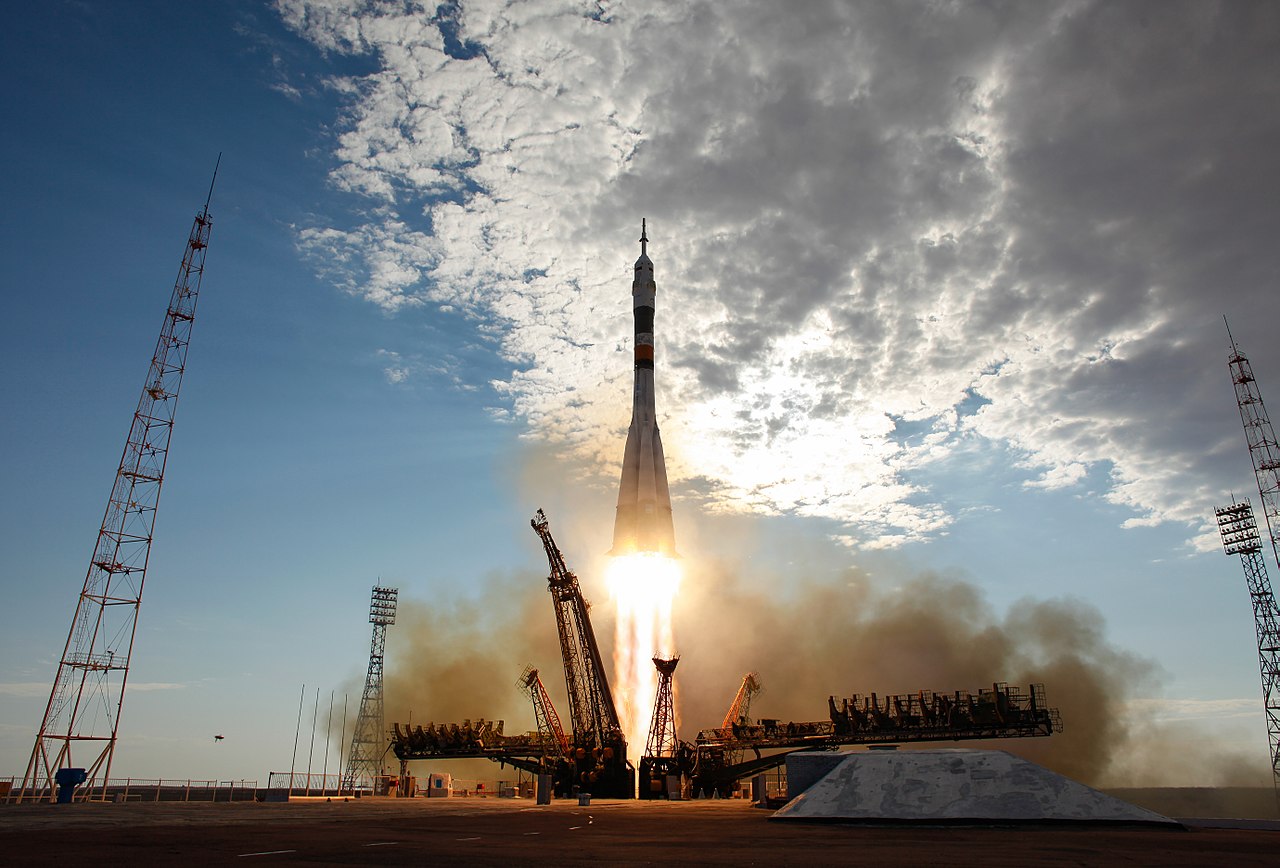
Soyuz-FG | Soyuz MS-10
Progress Rocket Space Center | RussiaBaikonur Cosmodrome, Republic of Kazakhstan
Oct. 11, 2018, 8:40 a.m.
Status: Failure
Mission:
Soyuz MS-10 was expected to begin expedition 57 by carrying Roscosmos cosmonaut Alexey Ovchinin and NASA astronaut Nick Hague to the International Space Station. However a launch failure occurred resulting in a loss of vehicle during flight, both crew members returned to Earth nominally.
Low Earth Orbit #SoyuzMS10Soyuz-FG | Soyuz MS-12
Progress Rocket Space Center | RussiaBaikonur Cosmodrome, Republic of Kazakhstan
March 14, 2019, 7:14 p.m.
Status: Success
Mission:
Soyuz MS-12 begins expedition 59 by carrying Roscosmos cosmonaut Aleksey Ovchinin, NASA astronauts Christina Hammock Koch and Nick Hague to the International Space Station. After launching from the Baikonur Cosmodrome in Kazakhstan, they will rendezvous to the station where they will remain for their 6 month stay.
Low Earth Orbit
Falcon 9 Block 5 | Crew-9
SpaceX | United States of AmericaCape Canaveral SFS, FL, USA
Sept. 28, 2024, 5:17 p.m.
The National Aeronautics and Space Administration is an independent agency of the executive branch of the United States federal government responsible for the civilian space program, as well as aeronautics and aerospace research. NASA have many launch facilities but most are inactive. The most commonly used pad will be LC-39B at Kennedy Space Center in Florida.
Falcon 9
Cygnus CRS-2 NG-24 (S.S. Steven R. Nagel)
Space Launch Complex 40 - Cape Canaveral SFS, FL, USAThis is the 24th flight of the Orbital ATK's uncrewed resupply spacecraft Cygnus and its 23rd flight to the International Space Station under the Com…
Smart Dragon 3
SatNet test satellite
South China Sea (launch location 3) - Haiyang Oriental SpaceportOfficially described as "Satellite-Internet Technology Demonstration Satellite". Probable 1 (?) test satellite for the Chinese state-owned LEO commun…
Falcon 9
Starlink Group 17-21
Space Launch Complex 4E - Vandenberg SFB, CA, USAA batch of 25 satellites for the Starlink mega-constellation - SpaceX's project for space-based Internet communication system.
Long March 6A
SatNet LEO Group 21
Launch Complex 9A - Taiyuan Satellite Launch Center, People's Republic of ChinaA batch of 5 Low Earth Orbit communication satellites for the Chinese state owned SatNet constellation operated by the China Satellite Network Group.…
Long March 8
SpaceSail Polar Group 07
Commercial LC-1 - Wenchang Space Launch Site, People's Republic of China18 Low Earth Orbit communication satellites with Ku, Q and V band payloads for the G60 constellation operated by Shanghai Spacesail Technologies with…

