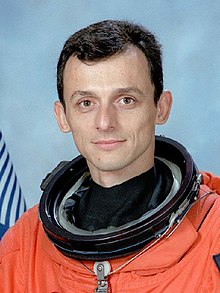
Pedro Duque
Spanish - (ESA)
Retired
Date of Birth: March 14, 1963
Age: 63
Pedro Francisco Duque Duque, OF, OMSE (Madrid, 14 March 1963) is a Spanish astronaut and aeronautics engineer, currently serving as Spain's Minister of Science, Innovation and Universities. He was the first Spanish astronaut. Duque underwent training in both Russia and the United States. His first spaceflight was as a mission specialist aboard space shuttle mission STS-95, during which Duque supervised ESA experimental modules. In October 2003, Duque visited the International Space Station on board of a Soyuz TMA Ship for several days during a crew changeover. The scientific program of this visit was called by ESA/Spain Misión Cervantes.
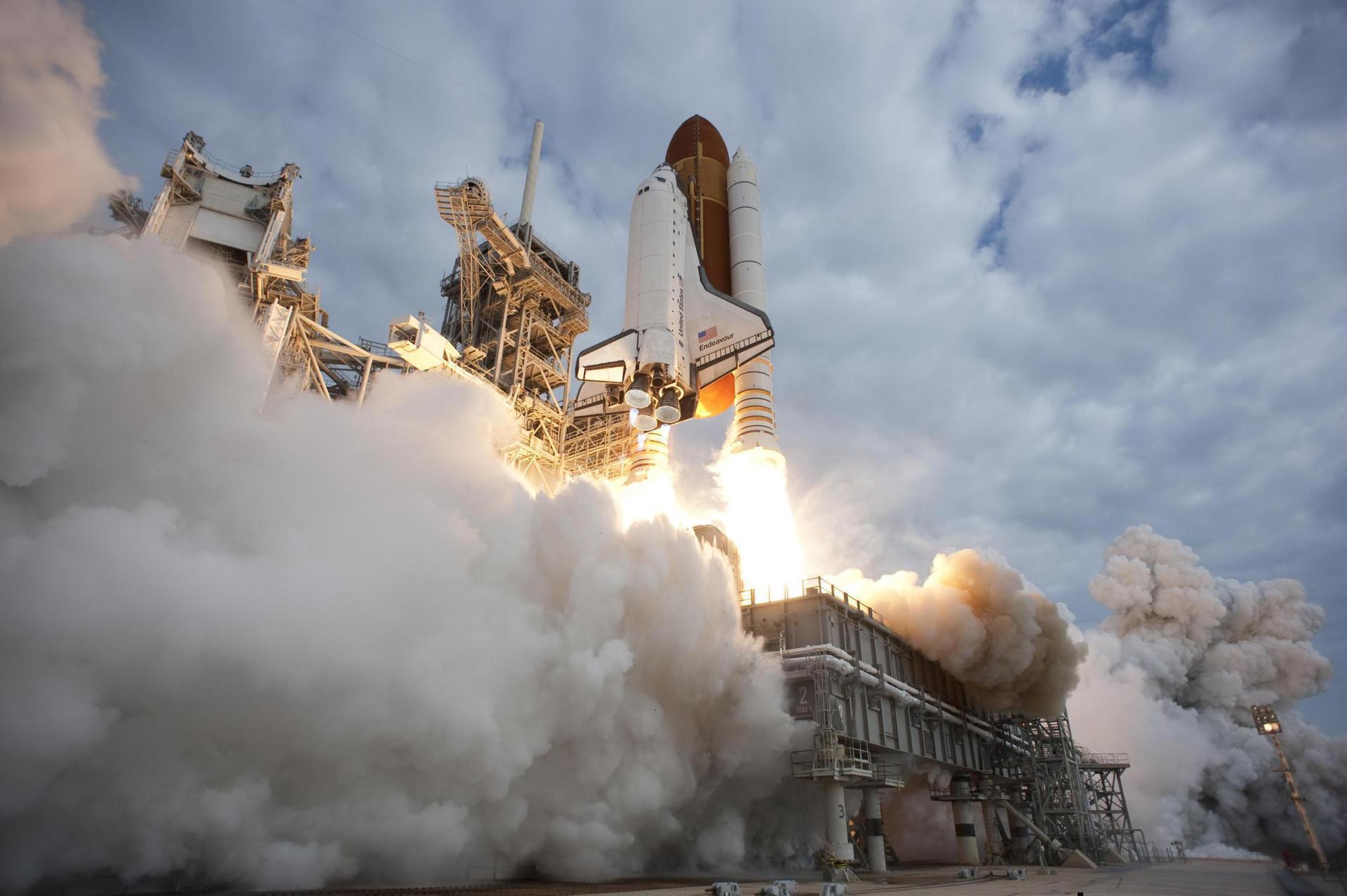
Space Shuttle Discovery / OV-103 | STS-95
National Aeronautics and Space Administration | United States of AmericaKennedy Space Center, FL, USA
Oct. 29, 1998, 7:19 p.m.
Status: Success
Mission:
STS-95 was a Space Shuttle mission launched from Kennedy Space Center, Florida on 29 October 1998, using the orbiter Discovery. It was the 25th flight of Discovery and the 92nd mission flown since the start of the Space Shuttle program in April 1981. It was a highly publicized mission due to former Project Mercury astronaut and United States Senator John H. Glenn, Jr.'s return to space for his second space flight. At age 77, Glenn became the oldest person, to date, to go into space. This mission is also noted for inaugurating ATSC HDTV broadcasting in the U.S., with live coast-to-coast coverage of the launch. In another first, Pedro Duque became the first Spaniard in space.
Low Earth Orbit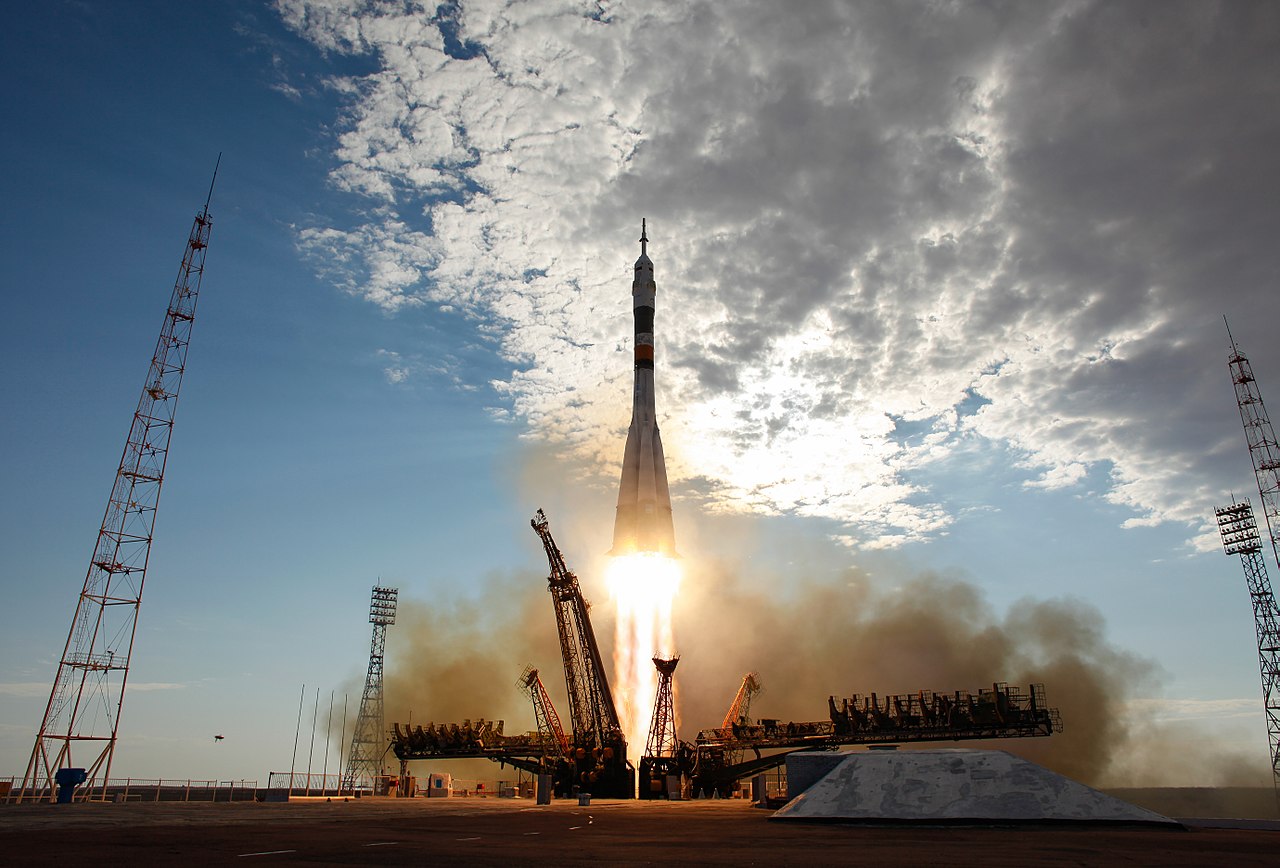
Soyuz-FG | Soyuz TMA-2
Progress Rocket Space Center | RussiaBaikonur Cosmodrome, Republic of Kazakhstan
April 26, 2003, 3:53 a.m.
Status: Success
Mission:
Soyuz TMA-2 begins Expedition 7 by carrying 2 astronauts and cosmonauts to the International Space Station. Russian Commander, cosmonaut Yuri Malenchenko alongside Flight Engineer, Edward Tsang Lu (NASA) will launch aboard the Soyuz spacecraft from the Baikonur Cosmodrome in Kazakhstan and then rendezvous with the station. It landed on October 28, 2003, 02:40:20 UTC
Low Earth OrbitSoyuz-FG | Soyuz TMA-3
Progress Rocket Space Center | RussiaBaikonur Cosmodrome, Republic of Kazakhstan
Oct. 18, 2003, 5:38 a.m.
Status: Success
Mission:
Soyuz TMA-3 begins Expedition 8 by carrying 3 astronauts and cosmonauts to the International Space Station. Russian Commander, cosmonaut Alexander Kaleri alongside Flight Engineers, Michael Foale (NASA) & Pedro Duque (ESA) will launch aboard the Soyuz spacecraft from the Baikonur Cosmodrome in Kazakhstan and then rendezvous with the station. It landed on April 30, 2004, 00:11:15 UTC
Low Earth OrbitThe European Space Agency is an intergovernmental organisation of 22 member states. Established in 1975 and headquartered in Paris, France, ESA has a worldwide staff of about 2,000 employees. ESA's space flight programme includes human spaceflight (mainly through participation in the International Space Station program); the launch and operation of unmanned exploration missions to other planets and the Moon; Earth observation, science and telecommunication; designing launch vehicles; and maintaining a major spaceport, the Guiana Space Centre at Kourou, French Guiana.
Smart Dragon 3
10 x CentiSpace-1
Haiyang offshore launch location - Haiyang Oriental SpaceportChinese commercial small satellites by Beijing-based company Future Navigation for providing GNSS augmentation signals services from LEO. They are pa…
Falcon 9
Starlink Group 10-62
Space Launch Complex 40 - Cape Canaveral SFS, FL, USAA batch of 29 satellites for the Starlink mega-constellation - SpaceX's project for space-based Internet communication system.
Soyuz 2.1a
Progress MS-33 (94P)
31/6 - Baikonur Cosmodrome, Republic of KazakhstanProgress resupply mission to the International Space Station.
Falcon 9
Starlink Group 17-15
Space Launch Complex 4E - Vandenberg SFB, CA, USAA batch of 25 satellites for the Starlink mega-constellation - SpaceX's project for space-based Internet communication system.
Electron
Eight Days A Week (StriX Launch 8)
Rocket Lab Launch Complex 1B - Rocket Lab Launch Complex 1, Mahia Peninsula, New ZealandSynthetic aperture radar satellite for Japanese Earth imaging company Synspective.

