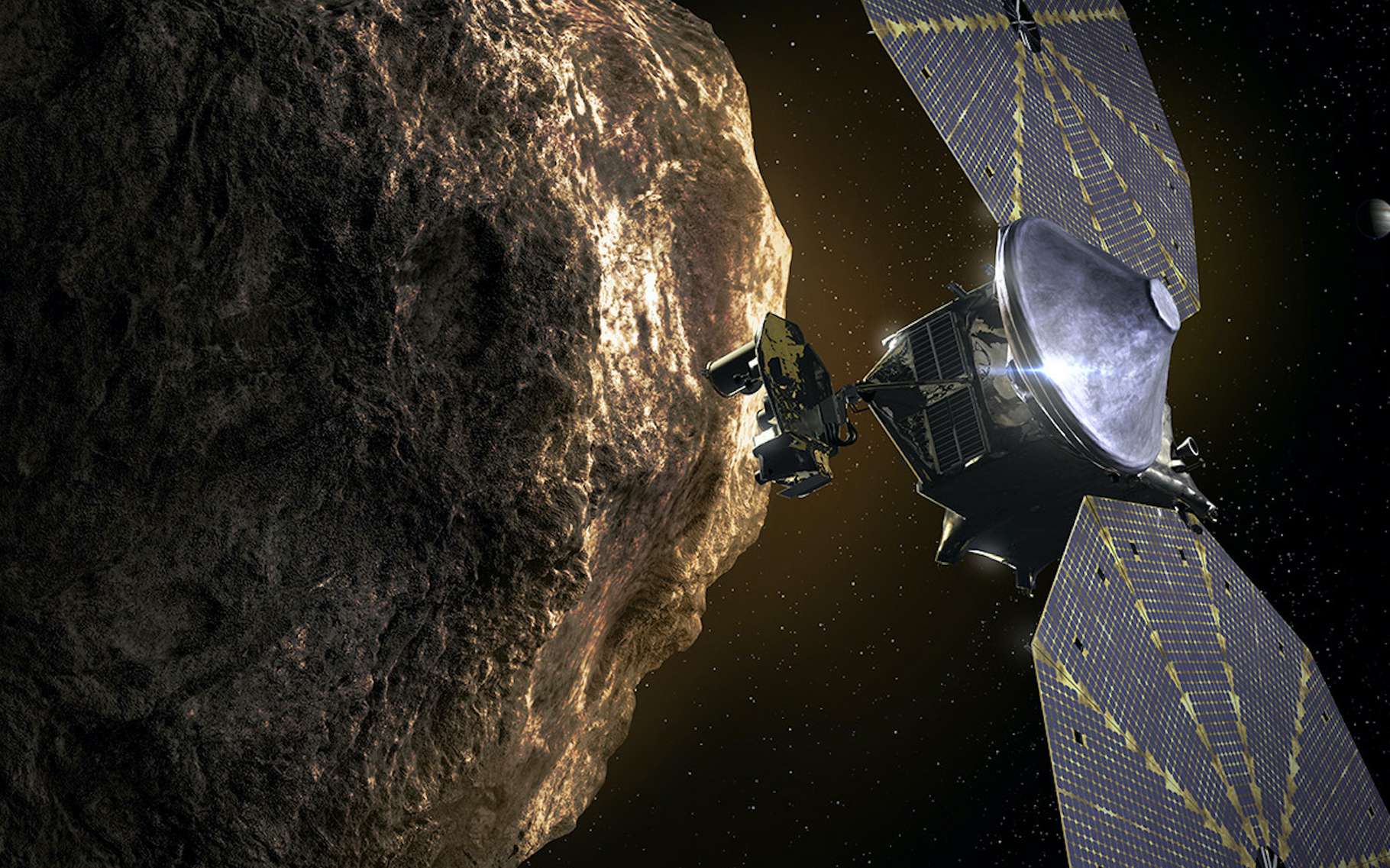
Flyby
Lucy Trojan Asteroids (617) Patroclus & Menoetius Flyby
(617) Patroclus & Menoetius Atlas V 401 | Lucy
Flyby of the Trojan binary asteroid pair (617) Patroclus and Menoetius by NASA's Lucy mission.
Related Information
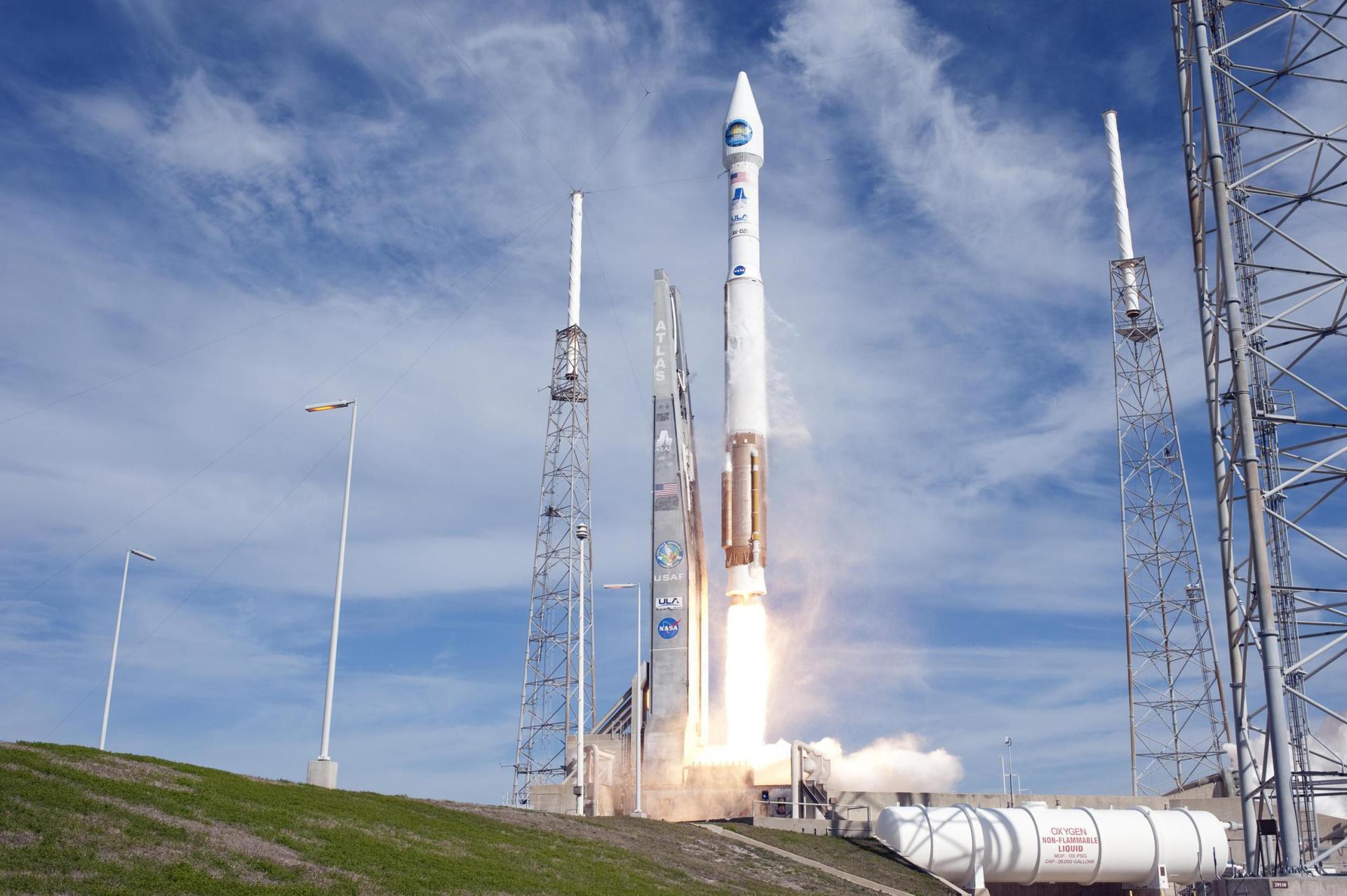
Atlas V 401 | Lucy
United Launch Alliance | United States of AmericaCape Canaveral SFS, FL, USA
Oct. 16, 2021, 9:34 a.m.
Status: Launch Successful
Mission:
Lucy is the first mission to explore and study Trojan asteroids. The Trojans are a type of asteroids that orbit the Sun in two groups, in front of and behind Jupiter in its orbit around our star. Since these asteroids have been in such stable orbits for billions of years, they are of great interest as remnants of early Solar System. Lucy is a NASA mission led by NASA Goddard and Southwest Research Institute in Boulder, Colorado. Over the course of 12 years, Lucy will fly by seven different Trojan asteroids and also one main belt asteroid. The complex trajectory to visit all targets will include several Earth gravity assists.
Heliocentric N/AFalcon 9
GPS III SV10
Space Launch Complex 40 - Cape Canaveral SFS, FL, USATenth of ten GPS III missions.
Falcon 9
Starlink Group 17-22
Space Launch Complex 4E - Vandenberg SFB, CA, USAA batch of 25 satellites for the Starlink mega-constellation - SpaceX's project for space-based Internet communication system.
New Glenn
BlueBird Block 2 #2
Launch Complex 36A - Cape Canaveral SFS, FL, USAAST SpaceMobile’s Block 2 BlueBird satellites are designed to deliver up to 10 times the bandwidth capacity of the BlueBird Block 1 satellites, requi…
Long March 4C
Daqi-2 (AEMS)
Launch Area 94 (SLS-2 / 603) - Jiuquan Satellite Launch Center, People's Republic of ChinaDaqi-2 (DQ-2), also known as the Atmospheric Environment Monitoring Satellite/AEMS, is the second of follow-on series of Chinese satellites to the GF…
Soyuz 2.1b/Volga
Kosmos (Unknown Payload)
43/4 (43R) - Plesetsk Cosmodrome, Russian FederationUnknown satellite(s) for the Russian military.
Falcon 9
Starlink Group 17-27
Space Launch Complex 4E - Vandenberg SFB, CA, USAA batch of 25 satellites for the Starlink mega-constellation - SpaceX's project for space-based Internet communication system.
Falcon 9
Starlink Group 10-24
Space Launch Complex 40 - Cape Canaveral SFS, FL, USAA batch of 29 satellites for the Starlink mega-constellation - SpaceX's project for space-based Internet communication system.
Kinetica 1
8 x Jilin-1
Launch Area 130 - Jiuquan Satellite Launch Center, People's Republic of China8 Earth observation satellites for the Jilin-1 commercial Earth observation satellites constellation: * High Resolution-07A 02-04 * High Resoluti…
Falcon 9
Cygnus CRS-2 NG-24 (S.S. Steven R. Nagel)
Space Launch Complex 40 - Cape Canaveral SFS, FL, USAThis is the 24th flight of the Orbital ATK's uncrewed resupply spacecraft Cygnus and its 23rd flight to the International Space Station under the Com…
Smart Dragon 3
SatNet test satellite
South China Sea (launch location 3) - Haiyang Oriental SpaceportOfficially described as "Satellite-Internet Technology Demonstration Satellite". Probable 1 (?) test satellite for the Chinese state-owned LEO commun…

