Flyby
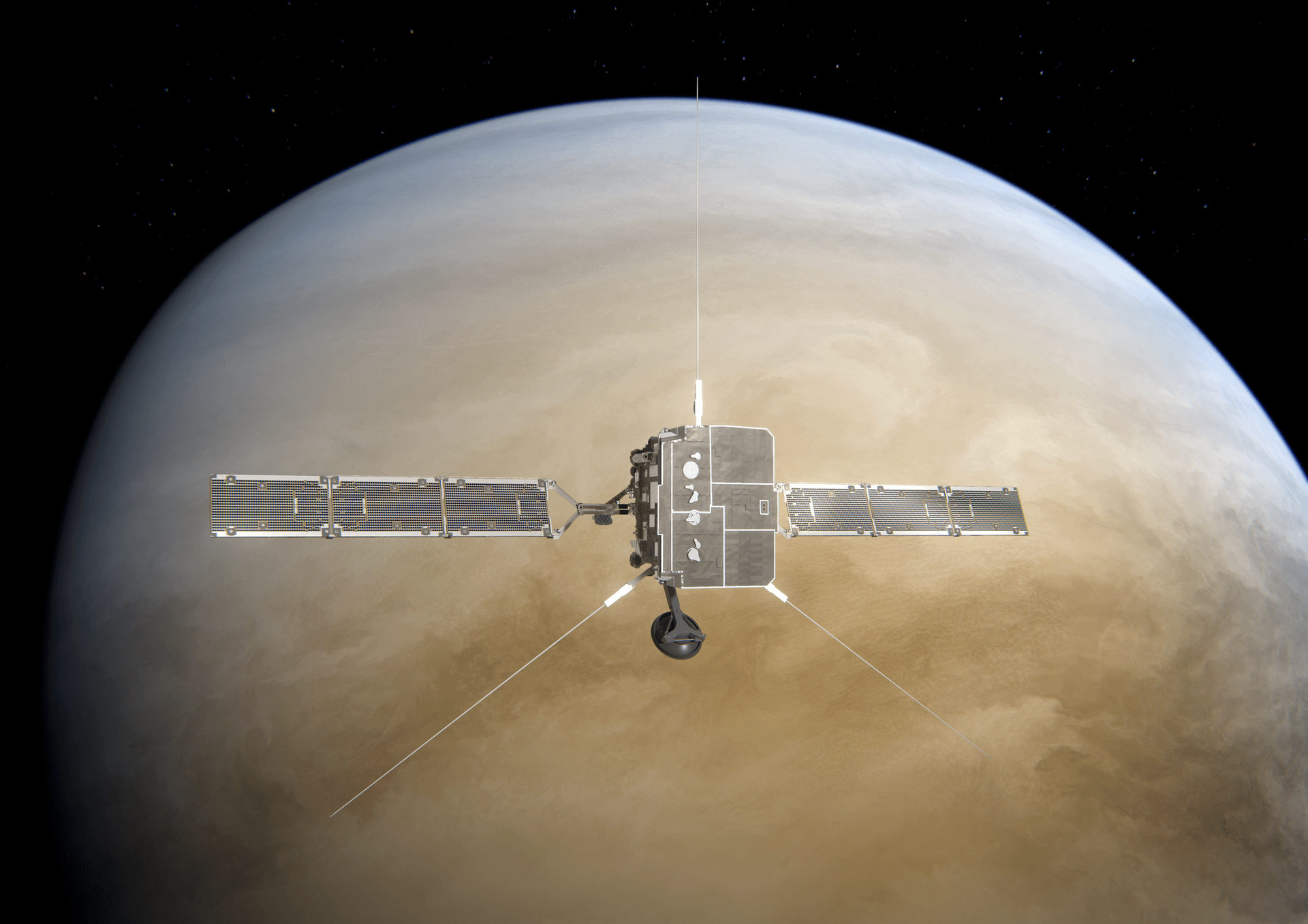
Solar Orbiter Venus Flyby
Venus Atlas V 411 | Solar Orbiter
Solar Orbiter, a partnership between ESA and NASA, will perform a gravity assist maneuver with Venus on September 2, 2030. Throughout its mission it also makes repeated gravity assist flybys of Venus to get closer to the Sun, and to change its orbital inclination, boosting it out of the ecliptic plane, to get the best – and first – views of the Sun’s poles.
Related Information
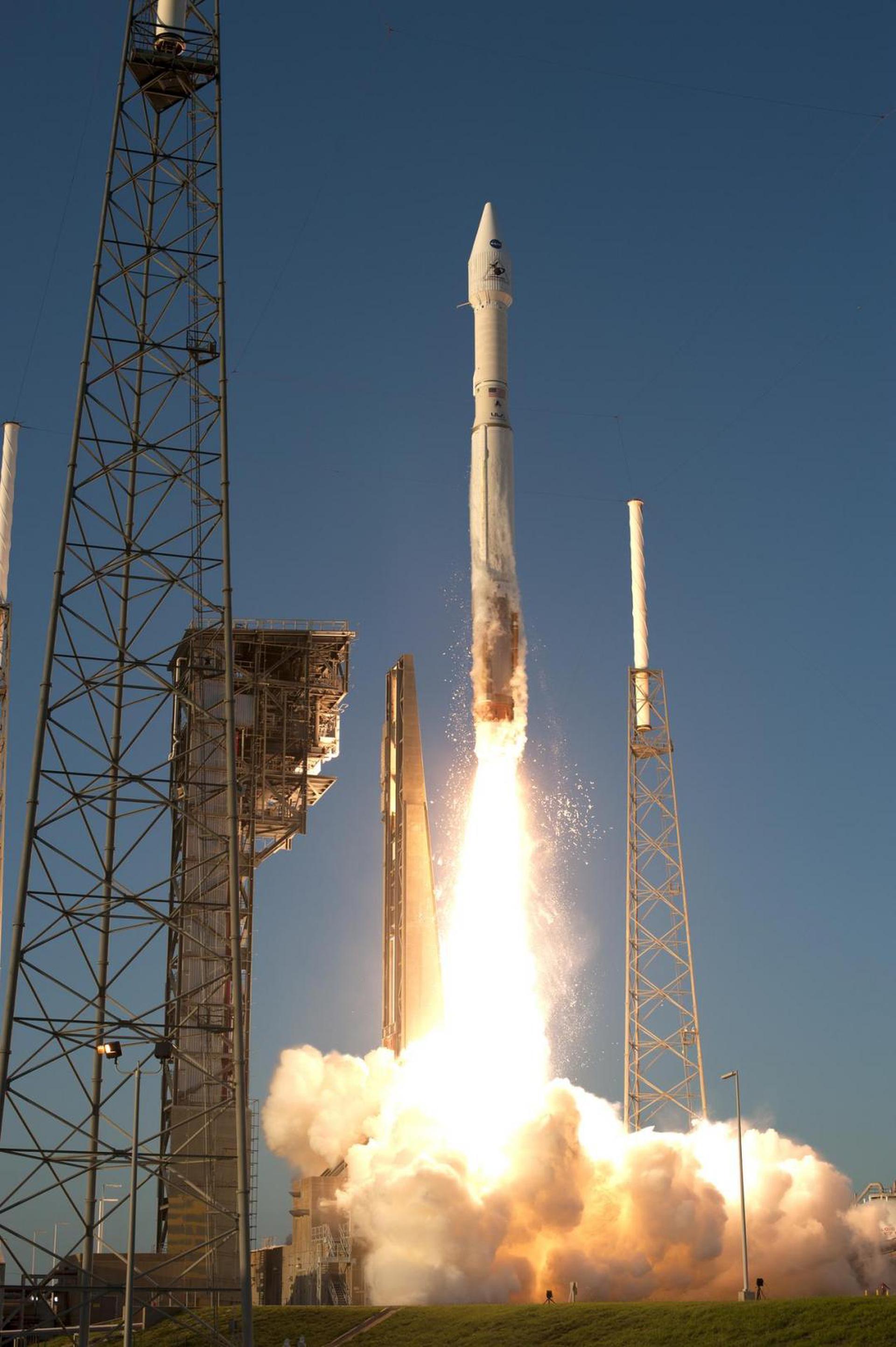
Atlas V 411 | Solar Orbiter
United Launch Alliance | United States of AmericaCape Canaveral SFS, FL, USA
Feb. 10, 2020, 4:03 a.m.
Status: Launch Successful
Mission:
Solar Orbiter is a joint ESA/NASA mission dedicated to solar and heliospheric physics. It will be used to examine how the Sun creates and controls the heliosphere, the vast bubble of charged particles blown by the solar wind into the interstellar medium. The spacecraft will combine in situ and remote sensing observations to gain new information about the solar wind, the heliospheric magnetic field, solar energetic particles, transient interplanetary disturbances and the Sun's magnetic field. Instruments include: * Solar Wind Analyser (SWA) * Energetic Particle Detector (EPD) * Magnetometer (MAG) * Radio and Plasma Wave analyser (RPW) * Polarimetric and Helioseismic Imager (PHI) * Extreme Ultraviolet Imager (EUI) * Spectral Imaging of the Coronal Environment (SPICE) * Spectrometer Telescope for Imaging X-rays (STIX) * Coronagraph (Metis) While mission is not intended to get as close to the Sun as Parker Solar Probe, it's designed to coordinate observations and has different set of instruments. Main mission starts after one and only Earth flyby in November 2021, and lasts until Dec 2026 when it enters extended phase. During the mission, Solar Orbiter will get through numerous Venus gravity assists, and its trajectory will be highly inclined allowing direct observations of Sun's poles.
Heliocentric N/A #SolOSpace Launch System (SLS)
Artemis II
Launch Complex 39B - Kennedy Space Center, FL, USAArtemis II is the first crewed mission as part of the Artemis program. Artemis II will send a crew of 4 - 3 Americans and 1 Canadian around the moon …
Falcon 9
Starlink Group 10-44
Space Launch Complex 40 - Cape Canaveral SFS, FL, USAA batch of 29 satellites for the Starlink mega-constellation - SpaceX's project for space-based Internet communication system.
Falcon 9
Transporter 16 (Dedicated SSO Rideshare)
Space Launch Complex 4E - Vandenberg SFB, CA, USADedicated rideshare flight to a sun-synchronous orbit with dozens of small microsatellites and nanosatellites for commercial and government customers.
Kinetica 2
Demo Flight (Qingzhou Prototype Spacecraft)
Launch Area 140 - Jiuquan Satellite Launch Center, People's Republic of ChinaFirst test launch and mission of CAS Space’s Kinetica-2 rocket, with 3 spacecraft on board: * New March 02 (Qingzhou space station cargo resupply …
Electron
Daughter Of The Stars (LEO-PNT Pathfinder A)
Rocket Lab Launch Complex 1A - Rocket Lab Launch Complex 1, Mahia Peninsula, New ZealandThe European Space Agency (ESA)'s LEO-PNT (Low Earth Orbit Positioning, Navigation and Timing) demonstrator mission will feature a 10-satellite const…
Long March 2C/YZ-1S
Shiyan 33
Launch Area 94 (SLS-2 / 603) - Jiuquan Satellite Launch Center, People's Republic of ChinaChinese satellite reported to be for "space environment research" purposes. Actual usage not known.
Falcon 9
Starlink Group 17-17
Space Launch Complex 4E - Vandenberg SFB, CA, USAA batch of 25 satellites for the Starlink mega-constellation - SpaceX's project for space-based Internet communication system.
Long March 2D
SuperView Neo 2-05 & 06
Launch Complex 9 - Taiyuan Satellite Launch Center, People's Republic of ChinaCommercial Synthetic-aperture radar Earth observation satellites built by CAST for China Siwei Survey and Mapping Technology Co. Ltd.
Soyuz 2.1b
16 x Rassvet-3
43/4 (43R) - Plesetsk Cosmodrome, Russian FederationNote: Payload identities uncertain. Batch of 16 Rassvet-3 Low Earth Orbit communication satellites for the Russian Byuro-1440 (Bureau 1440) conste…
Smart Dragon 3
10 x CentiSpace-1
Haiyang offshore launch location - Haiyang Oriental SpaceportChinese commercial small satellites by Beijing-based company Future Navigation for providing GNSS augmentation signals services from LEO. They are pa…

