Antares 230+ | Cygnus CRS-2 NG-19 (S.S. Laurel Clark)
Launch Successful
L - -- : -- : -- : --
Instantaneous launch window.
Launch Window
Aug. 2, 2023, 12:31 a.m. - Aug. 2, 2023, 12:31 a.m.


Instantaneous launch window.
Aug. 2, 2023, 12:31 a.m. - Aug. 2, 2023, 12:31 a.m.
This is the 19th flight of the Orbital ATK's uncrewed resupply spacecraft Cygnus and its 18th flight to the International Space Station under the Commercial Resupply Services contract with NASA.
Launch trajectory and telemetry simulations provided by Flight Club - a rocket launch simulator and orbital trajectory visualiser for all things space!

Launch successful.

Liftoff.

Livestream has started
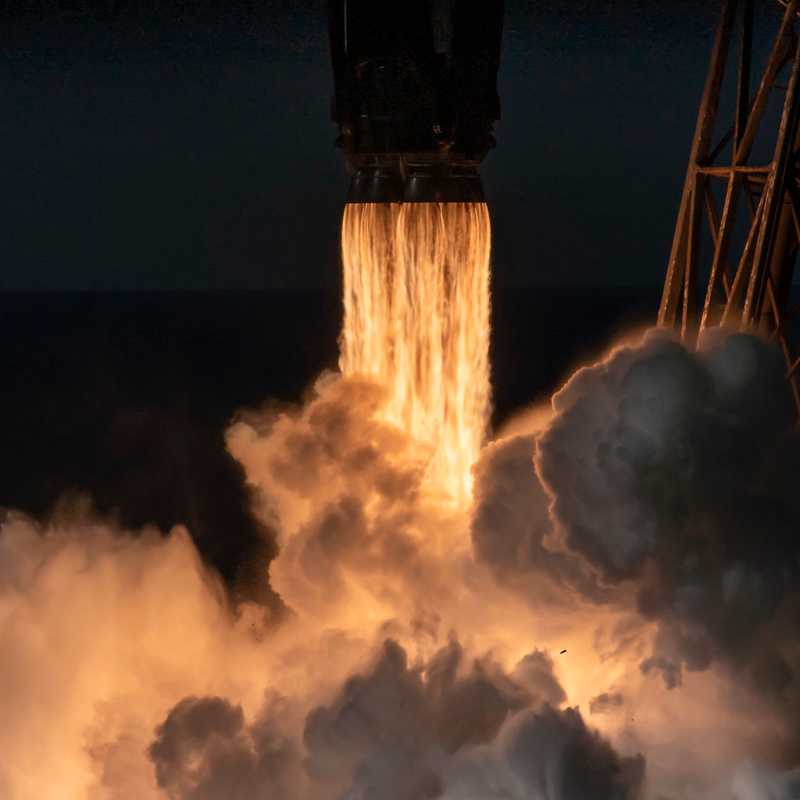
Weather 90%
Weather 80% favourable with primary concern being a "slight chance" of cumulus clouds.
Antares known during early development as Taurus II, is an expendable launch system developed by Orbital Sciences Corporation (now part of Northrop Grumman Innovation Systems after Northrop Grumman acquired Orbital ATK) and the Yuzhnoye Design Bureau to launch the Cygnus spacecraft to the International Space Station as part of NASA's COTS and CRS programs. Able to launch payloads heavier than 5,000 kg (11,000 lb) into low-Earth orbit, Antares is the largest rocket operated by Orbital ATK. Antares launches from the Mid-Atlantic Regional Spaceport and made its inaugural flight on April 21, 2013.
See DetailsThis is the nineteenth flight to the ISS by the Cygnus spacecraft under the CRS program and their eighth under the CRS-2 program. This is also the 15th use of the enhanced size Cygnus.
Cygnus Enhanced DetailsNorthrup Grumman Space Systems designs, builds and delivers space, defence and aviation-related systems to customers around the world. They aquired Orbital ATK in 2018 along with its launchers and ongoing missions.
INFO WIKI
On Tuesday evening at 8:31:14 PM EDT (00:31:14 UTC), Northrop Grumman ended an era of US space history with the final launch of the Antares 230+ launch vehicle carrying the Cygnus NG-19 spacecraft.
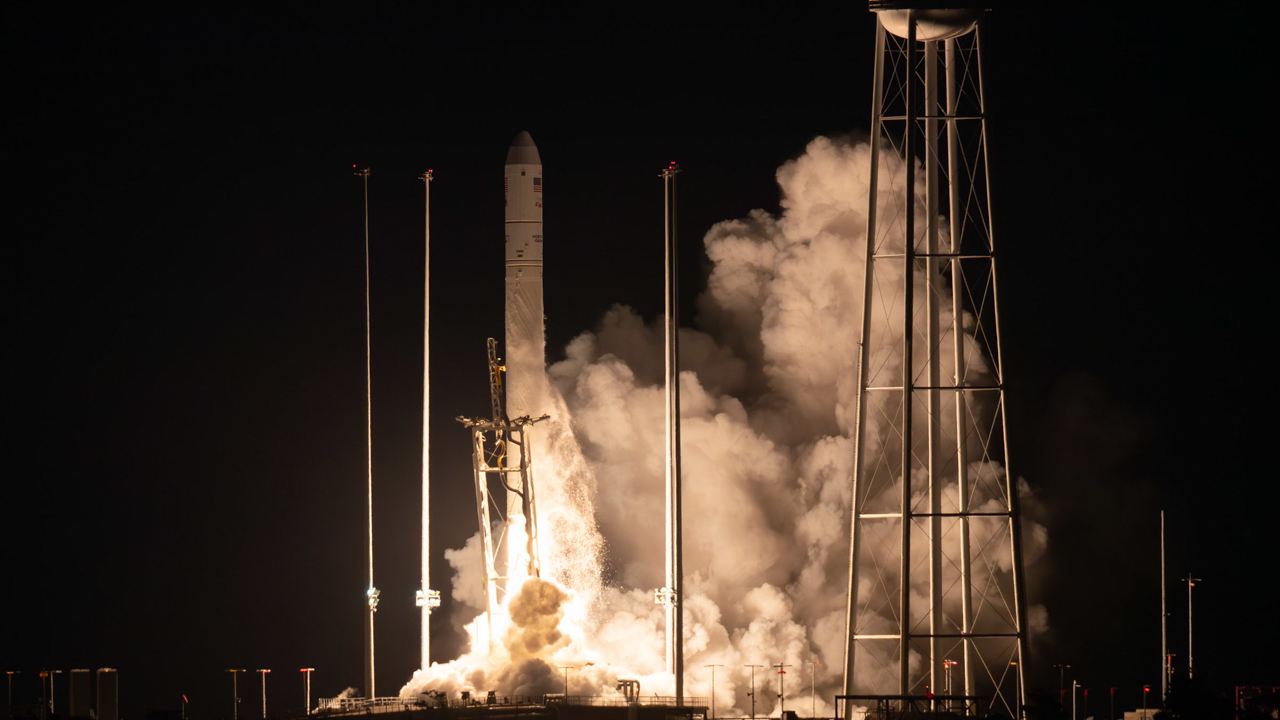
Antares’ final mission was a 100 percent success as the rocket sent the Cygnus cargo spacecraft to the International Space Station. The...

A Cygnus cargo spacecraft is on its way to the International Space Station after an Aug. 1 launch as part of NASA’s commitment to “full throttle” use of the station through the end of the decade.
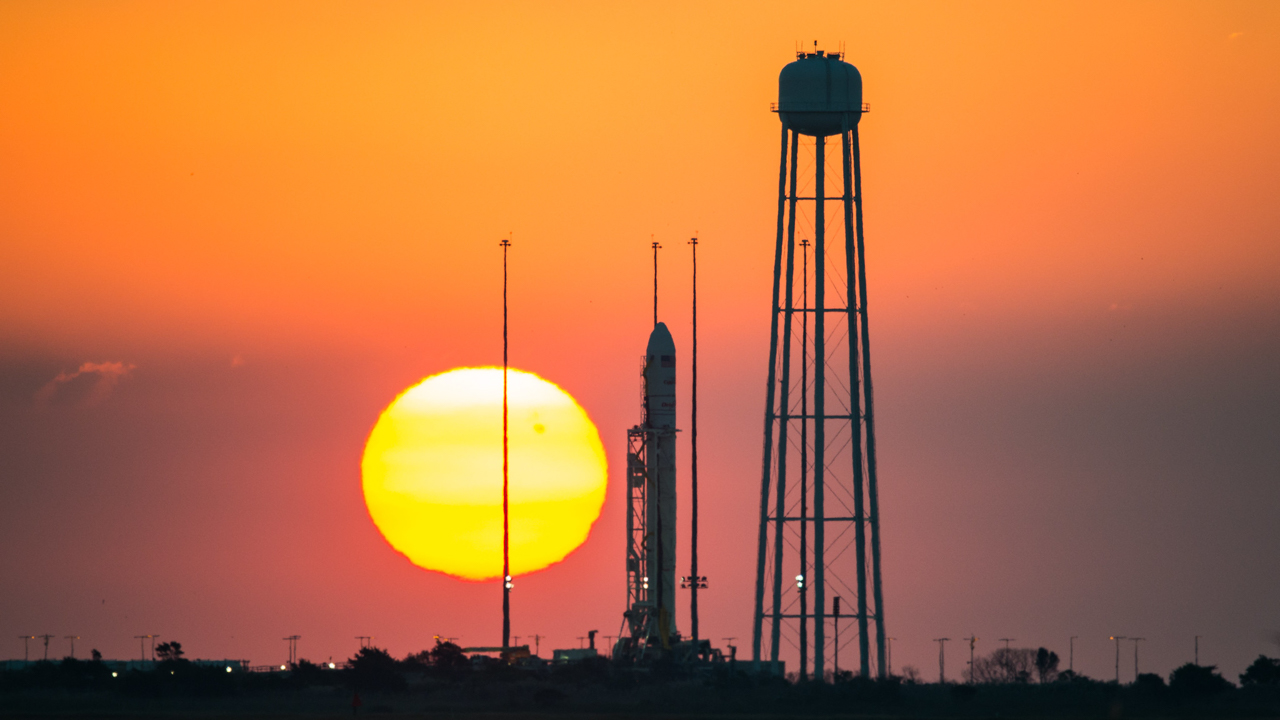
Later this evening at 8:31 p.m. ET (00:31 UTC on the 2nd), the Northrup Grumman Antares 230+ rocket is scheduled to launch...

The final flight of the Antares 230+ launch vehicle, marking the end of the career of Northrop Grumman’s Antares 200 series of rockets, lifted off Tuesday with the NG-19 mission under the Commercial Resupply Services cargo contract to supp…
A batch of 5 Low Earth Orbit communication satellites for the Chinese state owned SatNet constellation operated by the China Satellite Network Group.…
18 Low Earth Orbit communication satellites with Ku, Q and V band payloads for the G60 constellation operated by Shanghai Spacesail Technologies with…
STP-S29A is a mission under the U.S. Department of Defense's Space Test Program (STP) that will deliver technology demonstrations to orbit and contri…
A batch of 25 satellites for the Starlink mega-constellation - SpaceX's project for space-based Internet communication system.
Amazon Leo, formerly known as Project Kuiper, is a mega constellation of satellites in Low Earth Orbit that will offer broadband internet access, thi…
Note: Payload identity uncertain. Meridian is a series of communications satellite for military and civilian use.
First test launch of Space Pioneer’s Tianlong-3 rocket.
A batch of 29 satellites for the Starlink mega-constellation - SpaceX's project for space-based Internet communication system.
Artemis II is the first crewed mission as part of the Artemis program. Artemis II will send a crew of 4 - 3 Americans and 1 Canadian around the moon …
A batch of 29 satellites for the Starlink mega-constellation - SpaceX's project for space-based Internet communication system.

 View in Flightclub