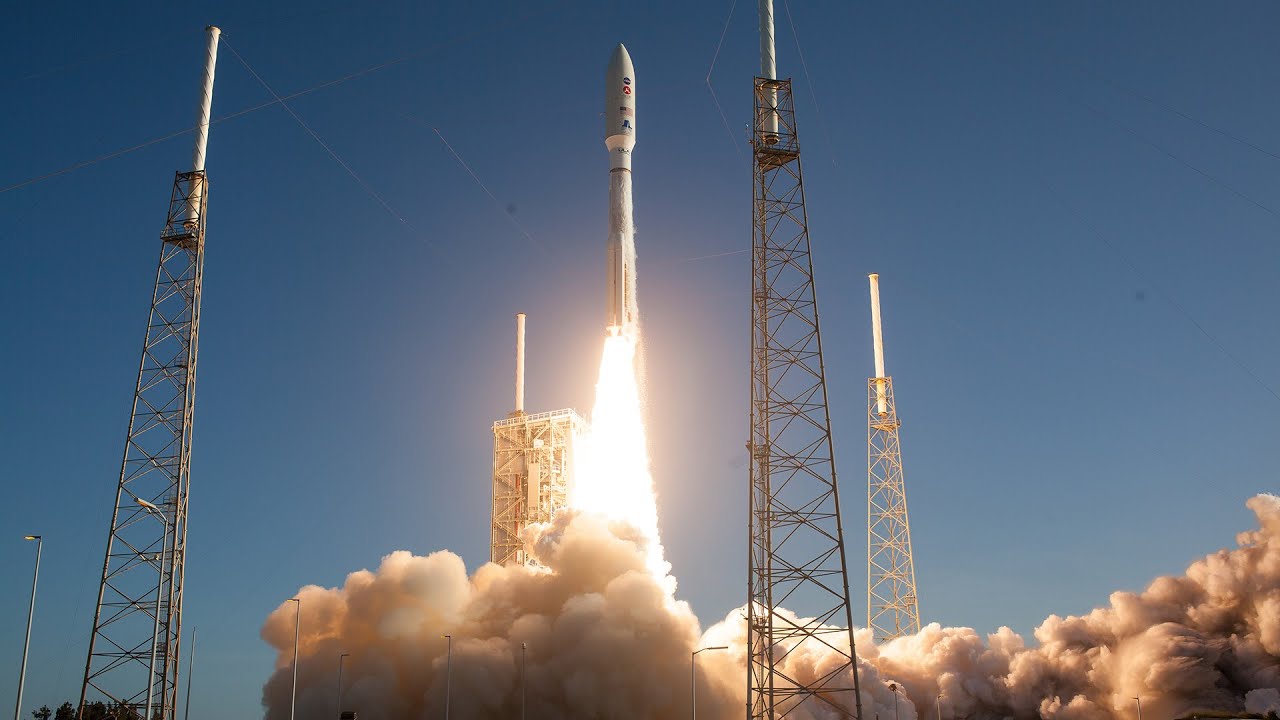
Atlas V 541 | Mars 2020 (Perseverance rover & Ingenuity helicopter)
Launch Successful
L - -- : -- : -- : --
Launch Window
July 30, 2020, 11:50 a.m. - July 30, 2020, 1:50 p.m.


July 30, 2020, 11:50 a.m. - July 30, 2020, 1:50 p.m.
Atop this ULA Atlas V rocket will be Perseverance, a car-sized rover which will explore an ancient river delta on Mars. Armed with a suite of six scientific instruments, Perseverance will primarily hunt for clues to the planet's distant past, and hopefully uncover signs of ancient life and habitability. The rover also carries an experiment that'll convert carbon dioxide into oxygen, a box-sized helicopter named Ingenuity that'll demonstrate powered flight on Mars, and a system that enables the rover to leave behind samples for later retrieval and return to Earth during NASA and ESA's ambitious sample return mission later this decade.
Atlas V with 5m Fairing, 4 SRB, 1 Centaur upper stage engine.
See DetailsUnited Launch Alliance (ULA) is a joint venture of Lockheed Martin Space Systems and Boeing Defense, Space & Security. ULA was formed in December 2006 by combining the teams at these companies which provide spacecraft launch services to the government of the United States. ULA launches from both coasts of the US. They launch their Atlas V vehicle from LC-41 in Cape Canaveral and LC-3E at Vandeberg. Their Delta IV launches from LC-37 at Cape Canaveral and LC-6 at Vandenberg.
INFO WIKI
New York (SDX) Feb 23, 2026 NASA's Perseverance rover can now determine its exact position on Mars without relying on ground teams, using a new system called Mars Global Localization that compares navigation camera panoramas to orbita…
Description Using its navigation cameras, NASA’s Perseverance Mars rover captured the five stereo pairs of images that make up this panorama on Feb. 2, 2026, the 1,762nd day, or sol, of the mission. A new technology called Mars Global Loca…
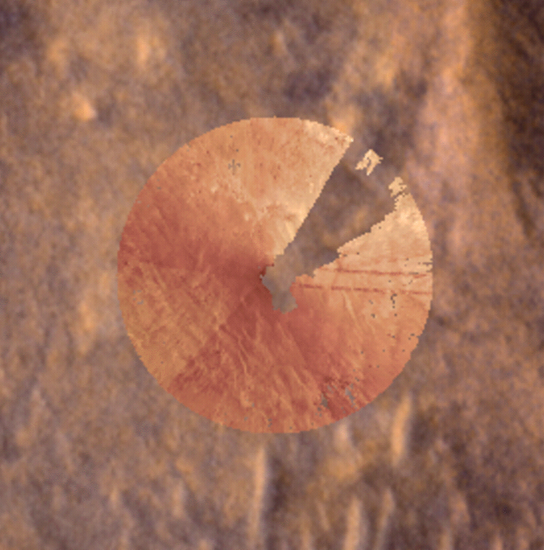
Description These images were part of the first successful use of a new technology called Mars Global Localization, developed at NASA’s Jet Propulsion Laboratory. Using its navigation cameras, NASA’s Perseverance captured a 360-degree view…
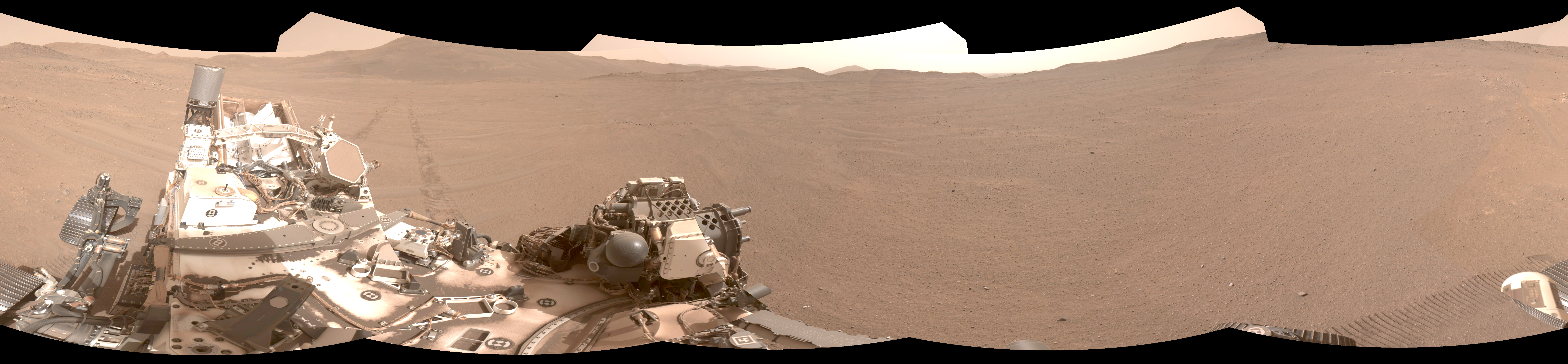
There is no GPS at the Red Planet, but a new technology called Mars Global Localization lets Perseverance determine precisely where it is — without human help. Imagine you’re all alone, driving along in a rocky, unforgiving desert with no…

Los Angeles CA (SPX) Feb 02, 2026 NASA's Perseverance Mars rover has completed the first AI planned drives ever carried out on another planet, using a vision capable generative AI system to map out safe routes across the rim of Jezero…
Daqi-2 (DQ-2), also known as the Atmospheric Environment Monitoring Satellite/AEMS, is the second of follow-on series of Chinese satellites to the GF…
Unknown satellite(s) for the Russian military.
A batch of 25 satellites for the Starlink mega-constellation - SpaceX's project for space-based Internet communication system.
A batch of 29 satellites for the Starlink mega-constellation - SpaceX's project for space-based Internet communication system.
8 Earth observation satellites for the Jilin-1 commercial Earth observation satellites constellation: * High Resolution-07A 02-04 * High Resoluti…
This is the 24th flight of the Orbital ATK's uncrewed resupply spacecraft Cygnus and its 23rd flight to the International Space Station under the Com…
Officially described as "Satellite-Internet Technology Demonstration Satellite". Probable 1 (?) test satellite for the Chinese state-owned LEO commun…
A batch of 25 satellites for the Starlink mega-constellation - SpaceX's project for space-based Internet communication system.
A batch of 5 Low Earth Orbit communication satellites for the Chinese state owned SatNet constellation operated by the China Satellite Network Group.…
18 Low Earth Orbit communication satellites with Ku, Q and V band payloads for the G60 constellation operated by Shanghai Spacesail Technologies with…