Atlas V 551 | ViaSat-3 F2 (ViaSat-3 EMEA)
Launch Successful
L - -- : -- : -- : --
Launch Window
Nov. 14, 2025, 3:04 a.m. - Nov. 14, 2025, 3:48 a.m.


Nov. 14, 2025, 3:04 a.m. - Nov. 14, 2025, 3:48 a.m.

ULA's Atlas V is launching the ViaSat-3 Flight 2 ultra-high-capacity broadband spacecraft for Viasat, a global technology company helping businesses, governments and communities transform their world through connectivity. Once in service, ViaSat-3 Flight 2 is expected to more than double the bandwid...
The ViaSat-3 is a series of three Ka-band satellites is expected to provide vastly superior capabilities in terms of service speed and flexibility for a satellite platform. Each ViaSat-3 class satellite is expected to deliver more than 1-Terabit per second of network capacity, and to leverage high levels of flexibility to dynamically direct capacity to where customers are located.
Launch trajectory and telemetry simulations provided by Flight Club - a rocket launch simulator and orbital trajectory visualiser for all things space!

Launch success with satellite in contact.
Liftoff.
GO for launch.
Updated launch weather, >95% GO.
New launch window.
Atlas V is an expendable launch system in the Atlas rocket family. It was formerly operated by Lockheed Martin and is now operated by United Launch Alliance (ULA), a joint venture with Boeing. Each Atlas V rocket uses a Russian-built RD-180 engine burning kerosene and liquid oxygen to power its first stage and an American-built RL10 engine burning liquid hydrogen and liquid oxygen to power its Centaur upper stage. The RD-180 engines are provided by RD Amross, while Aerojet Rocketdyne provides both the RL10 engines and the strap-on boosters used in some configurations. The standard payload fairing sizes are 4 or 5 meters in diameter and of various lengths. Fairings sizes as large as 7.2 m in diameter and up to 32.3 m in length have been considered. The rocket is assembled in Decatur, Alabama and Harlingen, Texas.
United Launch Alliance (ULA) is a joint venture of Lockheed Martin Space Systems and Boeing Defense, Space & Security. ULA was formed in December 2006 by combining the teams at these companies which provide spacecraft launch services to the government of the United States. ULA launches from both coasts of the US. They launch their Atlas V vehicle from LC-41 in Cape Canaveral and LC-3E at Vandeberg. Their Delta IV launches from LC-37 at Cape Canaveral and LC-6 at Vandenberg.
INFO WIKI
This week’s launch schedule features two high-profile launches that were pushed back after scrubs from… The post Launch Roundup: New Glenn, Viasat, & Sentinel-6B highlight busy week of launches appeared first on NASASpaceFlight.com.
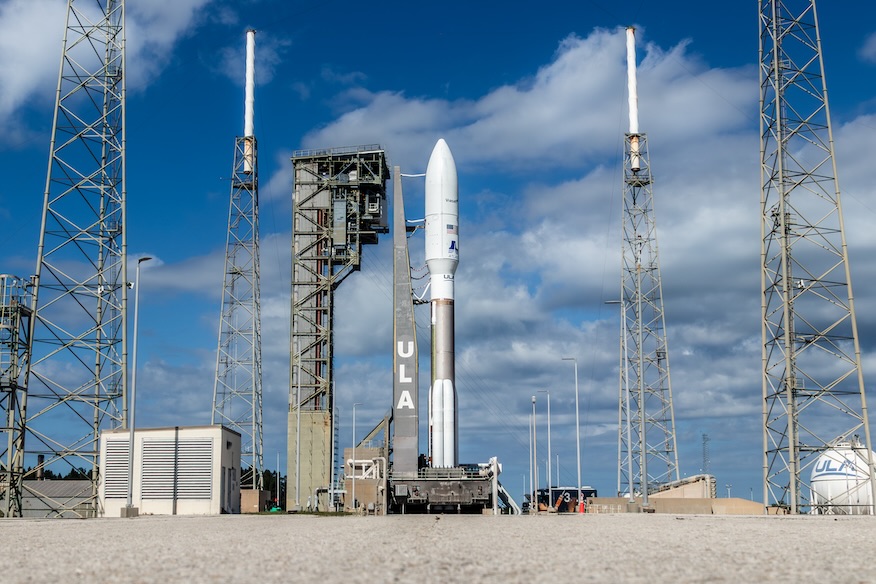
United Launch Alliance is counting down to a second launch attempt for an Atlas 5 rocket carrying the ViaSat-3 F2 satellite. Liftoff from pad 41 at Cape Canaveral Space Force Station is scheduled for 10:16 p.m. EST (0316 UTC) at the openin…
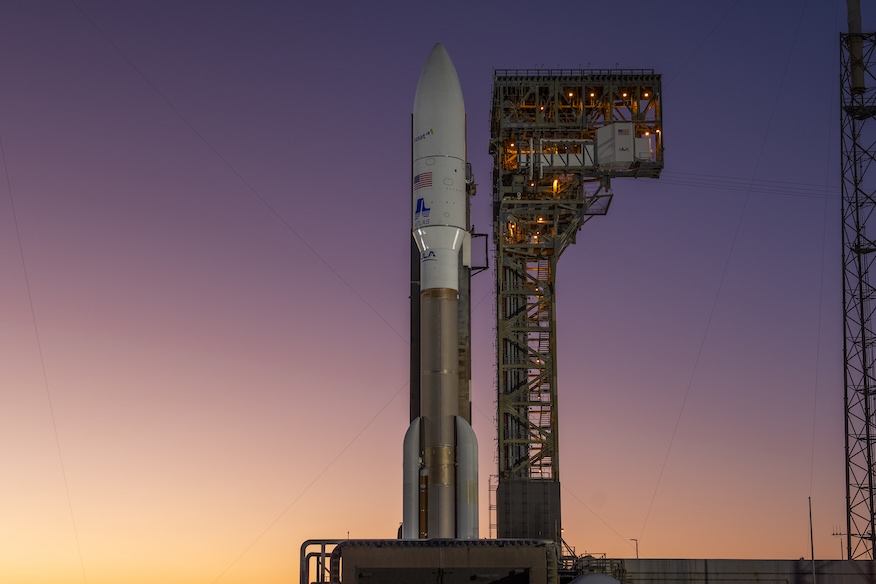
The mission is the second of three planned spacecraft that Viasat plans to operate in geostationary orbit. United Launch Alliance is targeting liftoff from pad 41 at Cape Canaveral Space Force Station at 10:24 p.m. EST (0324 UTC).

This week’s launch manifest will feature nine missions launching on seven different rockets, including the… The post Launch Roundup: Ariane 6 and New Glenn set to launch during busy week appeared first on NASASpaceFlight.com.
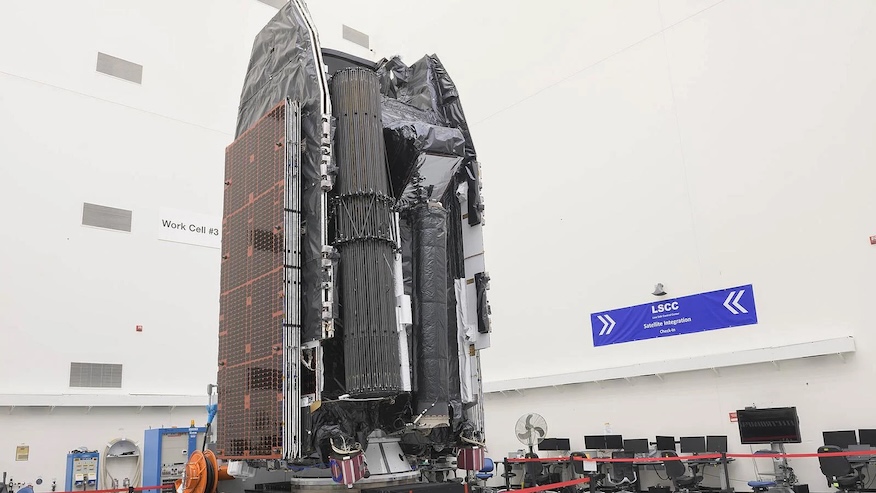
The spacecraft will launch onboard a United Launch Alliance Atlas 5 551 rocket from Cape Canaveral Space Force Station. It’s built on Boeing’s 702MP+ satellite bus.
18 Low Earth Orbit communication satellites with Ku, Q and V band payloads for the G60 constellation operated by Shanghai Spacesail Technologies with…
STP-S29A is a mission under the U.S. Department of Defense's Space Test Program (STP) that will deliver technology demonstrations to orbit and contri…
A batch of 25 satellites for the Starlink mega-constellation - SpaceX's project for space-based Internet communication system.
Amazon Leo, formerly known as Project Kuiper, is a mega constellation of satellites in Low Earth Orbit that will offer broadband internet access, thi…
Note: Payload identity uncertain. Meridian is a series of communications satellite for military and civilian use.
First test launch of Space Pioneer’s Tianlong-3 rocket.
A batch of 29 satellites for the Starlink mega-constellation - SpaceX's project for space-based Internet communication system.
Artemis II is the first crewed mission as part of the Artemis program. Artemis II will send a crew of 4 - 3 Americans and 1 Canadian around the moon …
A batch of 29 satellites for the Starlink mega-constellation - SpaceX's project for space-based Internet communication system.
Dedicated rideshare flight to a sun-synchronous orbit with dozens of small microsatellites and nanosatellites for commercial and government customers.


 View in Flightclub