Delta IV Heavy | Parker Solar Probe
Launch Successful
L - -- : -- : -- : --
Launch Window
Aug. 12, 2018, 7:31 a.m. - Aug. 12, 2018, 8:36 a.m.


Aug. 12, 2018, 7:31 a.m. - Aug. 12, 2018, 8:36 a.m.

This is Delta Launch Control from the Delta Operations Center at Cape Canaveral Air Force Station in Florida as we begin a second launch attempt for the Delta IV Heavy rocket carrying NASA’s Parker Solar Probe. The Air Force weather officer on duty at the 45th Weather Squadron just provided …
Flying into the Sun’s atmosphere (or corona) for the first time. Coming closer to the Sun than any previous spacecraft, Parker Solar Probe will employ a combination of in situ measurements and imaging to achieve the mission’s primary scientific goal: to understand how the Sun’s corona is heated and how the solar wind is accelerated.
The Delta IV Heavy (Delta 9250H) is an expendable heavy-lift launch vehicle, the largest type of the Delta IV family, and is the world's second highest-capacity rocket in operation. It is manufactured by United Launch Alliance and was first launched in 2004.
See DetailsUnited Launch Alliance (ULA) is a joint venture of Lockheed Martin Space Systems and Boeing Defense, Space & Security. ULA was formed in December 2006 by combining the teams at these companies which provide spacecraft launch services to the government of the United States. ULA launches from both coasts of the US. They launch their Atlas V vehicle from LC-41 in Cape Canaveral and LC-3E at Vandeberg. Their Delta IV launches from LC-37 at Cape Canaveral and LC-6 at Vandenberg.
INFO WIKI
A testing replica of the “backbone” of NASA’s James Webb Space Telescope and a full-scale model of the agency’s Parker Solar Probe are now on permanent display at the Smithsonian’s National Air and Space Museum, Steven F. Udvar-Hazy Center…

Cambridge, MA (SPX) Dec 14, 2025 Astronomers have assembled the first continuous, two-dimensional maps of the outer edge of the Sun's atmosphere, tracing the boundary where the solar wind escapes the Sun's magnetic control. By combini…

Greenbelt MD (SPX) Dec 14, 2025 Images captured by NASA's Parker Solar Probe as the spacecraft made its record-breaking closest approach to the Sun in December 2024 have now revealed new details about how solar magnetic fields respons…
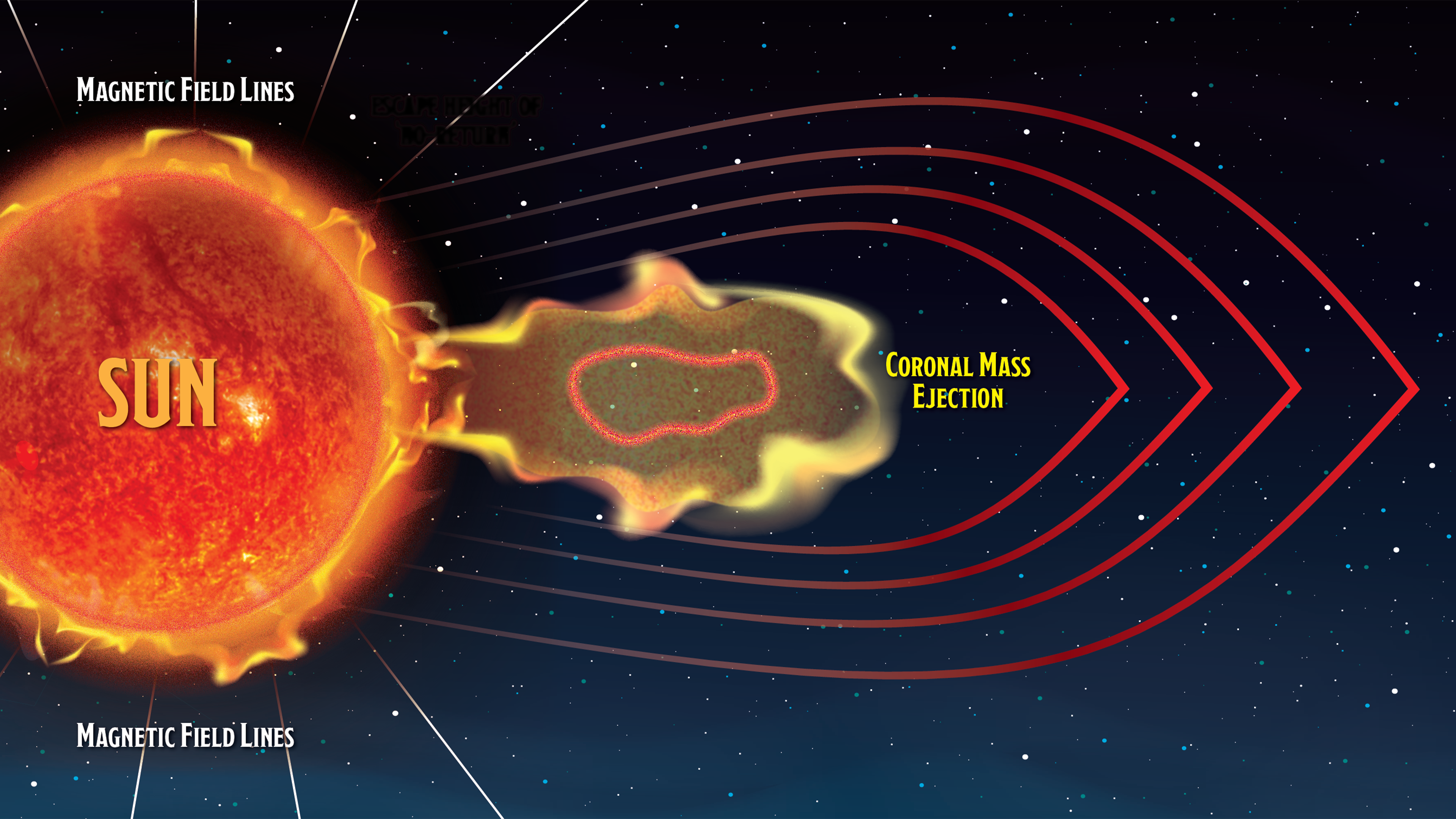
Images captured by NASA’s Parker Solar Probe as the spacecraft made its record-breaking closest approach to the Sun in December 2024 have now revealed new details about how solar magnetic fields responsible for space weather escape from th…
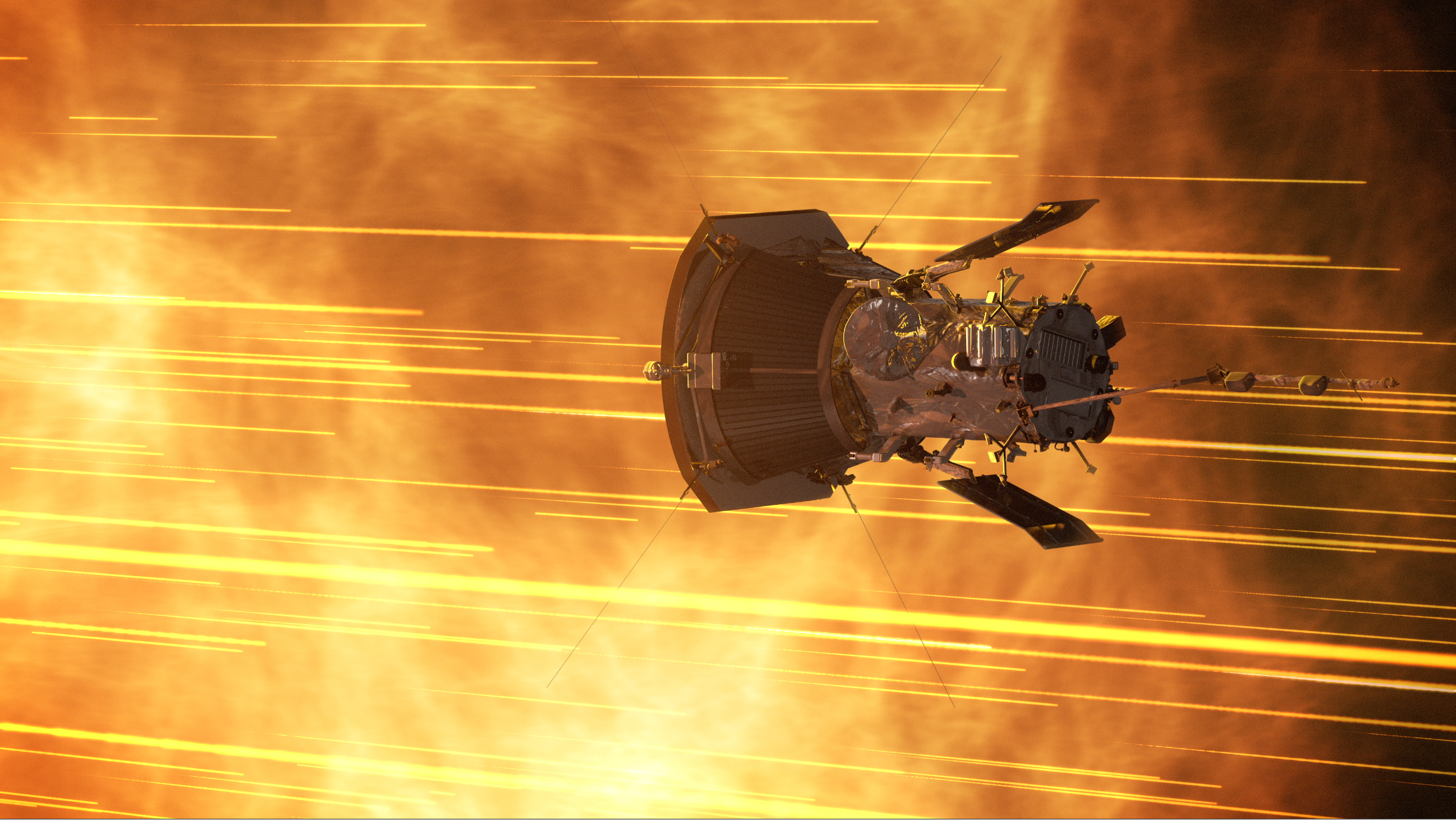
Two Stars in Solar Science It takes a lot of work to make space missions happen. Hundreds or even thousands of experts work as a team to put together the spacecraft. Then it has to be tested in conditions similar to space, to be sure that …
A batch of 25 satellites for the Starlink mega-constellation - SpaceX's project for space-based Internet communication system.
Amazon Leo, formerly known as Project Kuiper, is a mega constellation of satellites in Low Earth Orbit that will offer broadband internet access, thi…
Note: Payload identity uncertain. Meridian is a series of communications satellite for military and civilian use.
First test launch of Space Pioneer’s Tianlong-3 rocket.
A batch of 29 satellites for the Starlink mega-constellation - SpaceX's project for space-based Internet communication system.
Artemis II is the first crewed mission as part of the Artemis program. Artemis II will send a crew of 4 - 3 Americans and 1 Canadian around the moon …
A batch of 29 satellites for the Starlink mega-constellation - SpaceX's project for space-based Internet communication system.
Dedicated rideshare flight to a sun-synchronous orbit with dozens of small microsatellites and nanosatellites for commercial and government customers.
First test launch and mission of CAS Space’s Kinetica-2 rocket, with 3 spacecraft on board: * New March 02 (Qingzhou space station cargo resupply …
The European Space Agency (ESA)'s LEO-PNT (Low Earth Orbit Positioning, Navigation and Timing) demonstrator mission will feature a 10-satellite const…

