Electron | It’s a Little Chile Up Here (STP-27RM)
Launch Successful
L - -- : -- : -- : --
Launch Window
July 29, 2021, 6 a.m. - July 29, 2021, 8 a.m.


July 29, 2021, 6 a.m. - July 29, 2021, 8 a.m.
A U.S. Air Force experimental spacecraft. It will demonstrate the use of a deployable sensor, where the sensor’s mass is a substantial fraction of the total mass of the spacecraft and provide a platform to test future space protection capabilities.

Launch success confirmed

New launch time

Moved to 2021
Electron is a two-stage orbital expendable launch vehicle (with an optional third stage) developed by the American aerospace company Rocket Lab. Electron is a small-lift launch vehicle designed to launch small satellites and cubesats to sun-synchronous orbit and low earth orbit. The Electron is the first orbital class rocket to use electric-pump-fed engines, powered by the 9 Rutherford engines on the first stage. It is also used as a suborbital testbed (called HASTE) for hypersonics research.
See DetailsRocket Lab is an American aerospace manufacturer with a wholly owned New Zealand subsidiary. The company develops lightweight, cost-effective commercial rocket launch services. The Electron Program was founded on the premise that small payloads such as CubeSats require dedicated small launch vehicles and flexibility not currently offered by traditional rocket systems. Its rocket, the Electron, is a light-weight rocket and is now operating commercially. The company is also producing a variety of spacecrafts and spacecrafts components.
INFO WIKI
Resuming launches after a mission failure two months ago, Rocket Lab successfully placed a small U.S. military research and development satellite into orbit Thursday following a fiery liftoff from New Zealand on a flight that was originall…
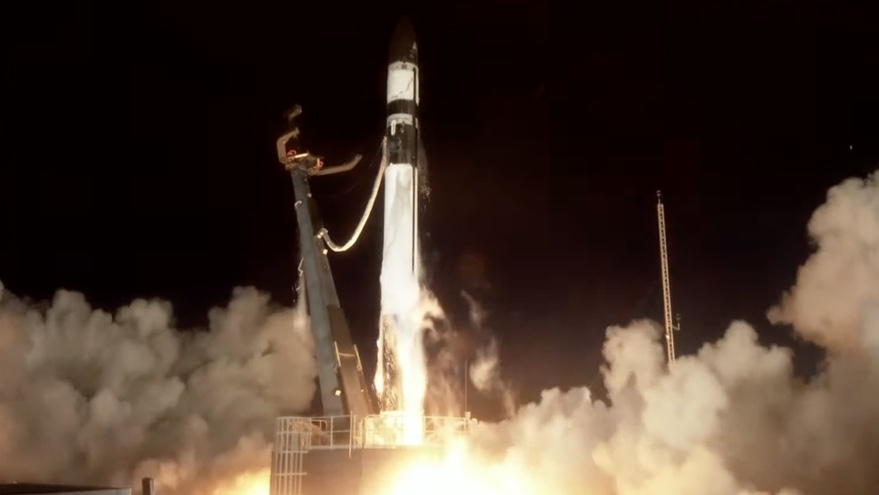
Rocket Lab returned its Electron rocket to flight July 29 with the successful launch of an experimental satellite for the U.S. Space Force.

Rocket Lab is set to launch a small U.S. military technology demonstration satellite from New Zealand Thursday on the company’s first mission since a second stage failure doomed a commercial mission in May.

Rocket Lab conducted the 21st flight of its Electron small satellite launch vehicle, a return to flight mission following a failure over two months ago. The launch carried a satellite for the United States Space Force on a dedicated trip.
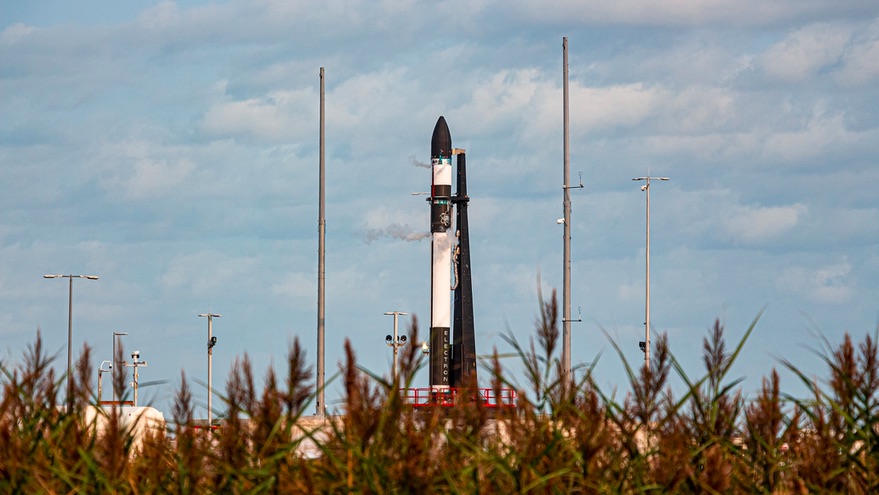
The first launch of Rocket Lab’s Electron rocket from a site in the United States won’t take place until 2021 because of problems with the flight termination system NASA requires the rocket to use.
A batch of 29 satellites for the Starlink mega-constellation - SpaceX's project for space-based Internet communication system.
8 Earth observation satellites for the Jilin-1 commercial Earth observation satellites constellation: * High Resolution-07A 02-04 * High Resoluti…
This is the 24th flight of the Orbital ATK's uncrewed resupply spacecraft Cygnus and its 23rd flight to the International Space Station under the Com…
Officially described as "Satellite-Internet Technology Demonstration Satellite". Probable 1 (?) test satellite for the Chinese state-owned LEO commun…
A batch of 25 satellites for the Starlink mega-constellation - SpaceX's project for space-based Internet communication system.
A batch of 5 Low Earth Orbit communication satellites for the Chinese state owned SatNet constellation operated by the China Satellite Network Group.…
18 Low Earth Orbit communication satellites with Ku, Q and V band payloads for the G60 constellation operated by Shanghai Spacesail Technologies with…
STP-S29A is a mission under the U.S. Department of Defense's Space Test Program (STP) that will deliver technology demonstrations to orbit and contri…
A batch of 25 satellites for the Starlink mega-constellation - SpaceX's project for space-based Internet communication system.
Amazon Leo, formerly known as Project Kuiper, is a mega constellation of satellites in Low Earth Orbit that will offer broadband internet access, thi…