Falcon 9 Block 5 | Amazon Leo (KF-03)
Launch Successful
L - -- : -- : -- : --
Launch Window
Oct. 14, 2025, 12:08 a.m. - Oct. 14, 2025, 2:22 a.m.


Oct. 14, 2025, 12:08 a.m. - Oct. 14, 2025, 2:22 a.m.

Watch live coverage as SpaceX launches a Falcon 9 rocket with a batch of 24 satellites for Amazon's Project Kuiper broadband internet service, a rival to the Starlink network. Liftoff from Space Launc...
Third of a three launches contract for Amazon's Kuiper low Earth orbit satellite internet constellation, with 24 satellites on board. Amazon Leo, formerly known as Project Kuiper, is a mega constellation of satellites in Low Earth Orbit that will offer broadband internet access, this constellation will be managed by Kuiper Systems LLC, a subsidiary of Amazon. This constellation is planned to be composed of 3,276 satellites. The satellites are projected to be placed in 98 orbital planes in three orbital layers, one at 590 km, 610 km and 630 km altitude.
Launch trajectory and telemetry simulations provided by Flight Club - a rocket launch simulator and orbital trajectory visualiser for all things space!

Launch success.
Liftoff.
Now targeting Oct 14 at 01:58 UTC
Now targeting Oct 14 at 00:34 UTC
Now targeting Oct 14 at 00:08 UTC
Falcon 9 is a two-stage rocket designed and manufactured by SpaceX for the reliable and safe transport of satellites and the Dragon spacecraft into orbit. The Block 5 variant is the fifth major interval aimed at improving upon the ability for rapid reusability.
See DetailsThe Falcon 9 1st stage B1091 has landed on ASDS ASOG after its 2nd flight.
Result: Successful Autonomous Spaceport Drone Ship landing at A Shortfall of Gravitas.Space Exploration Technologies Corp., known as SpaceX, is an American aerospace manufacturer and space transport services company headquartered in Hawthorne, California. It was founded in 2002 by entrepreneur Elon Musk with the goal of reducing space transportation costs and enabling the colonization of Mars. SpaceX operates from many pads, on the East Coast of the US they operate from SLC-40 at Cape Canaveral Space Force Station and historic LC-39A at Kennedy Space Center. They also operate from SLC-4E at Vandenberg Space Force Base, California, usually for polar launches. Another launch site is being developed at Boca Chica, Texas.
INFO WIKI
Following the successful flight of Starship Flight 11 on Monday, SpaceX is set to continue… The post Launch Roundup: Falcon 9 to launch six missions in one week appeared first on NASASpaceFlight.com.
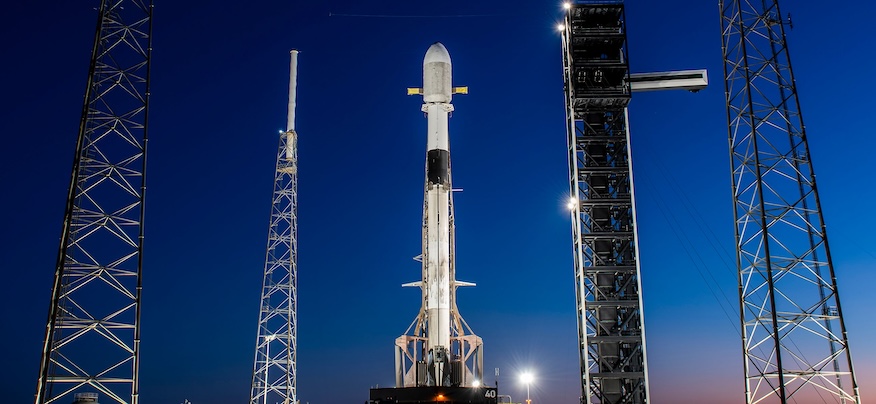
The launch comes following several stormy days across Florida’s Space Coast. Liftoff of SpaceX’s Falcon 9 rocket from pad 40 at Cape Canaveral Space Force is scheduled for 8:08 p.m. EDT (0008 UTC).
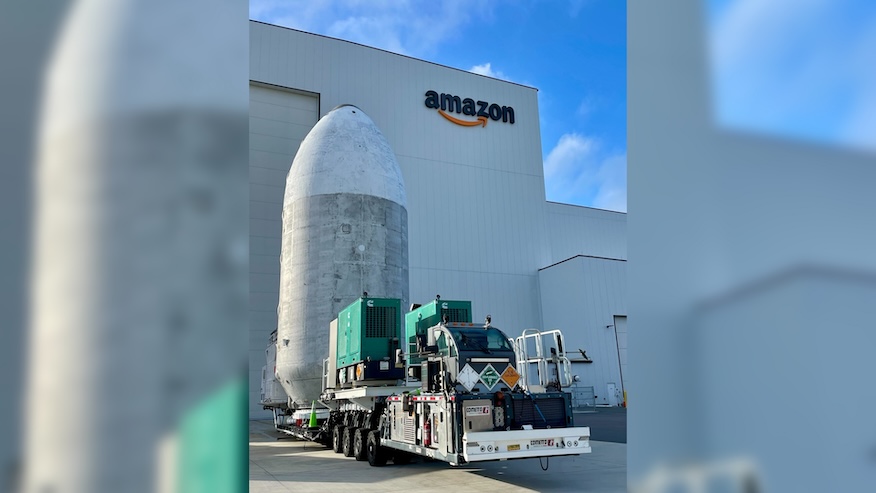
This is the third and final launch that Amazon booked onboard a SpaceX Falcon 9 rocket. Liftoff from pad 40 at Cape Canaveral Space Force Station is scheduled for 9:34 p.m. EDT (0134 UTC).

SpaceX is set to dominate the launch manifest for the first whole week of October… The post Launch Roundup: Falcon 9 to launch five times, Blue Origin to launch crew appeared first on NASASpaceFlight.com.

SpaceX is scheduled to launch up to three times this week, with each mission planned… The post Launch Roundup: Falcon 9 launches Starlink and Kuiper satellites appeared first on NASASpaceFlight.com.
A batch of 29 satellites for the Starlink mega-constellation - SpaceX's project for space-based Internet communication system.
Dedicated rideshare flight to a sun-synchronous orbit with dozens of small microsatellites and nanosatellites for commercial and government customers.
First test launch and mission of CAS Space’s Kinetica-2 rocket, with 3 spacecraft on board: * New March 02 (Qingzhou space station cargo resupply …
The European Space Agency (ESA)'s LEO-PNT (Low Earth Orbit Positioning, Navigation and Timing) demonstrator mission will feature a 10-satellite const…
Chinese satellite reported to be for "space environment research" purposes. Actual usage not known.
A batch of 25 satellites for the Starlink mega-constellation - SpaceX's project for space-based Internet communication system.
Commercial Synthetic-aperture radar Earth observation satellites built by CAST for China Siwei Survey and Mapping Technology Co. Ltd.
Note: Payload identities uncertain. Batch of 16 Rassvet-3 Low Earth Orbit communication satellites for the Russian Byuro-1440 (Bureau 1440) conste…
Chinese commercial small satellites by Beijing-based company Future Navigation for providing GNSS augmentation signals services from LEO. They are pa…
A batch of 29 satellites for the Starlink mega-constellation - SpaceX's project for space-based Internet communication system.


 View in Flightclub