Falcon 9 Block 5 | Axiom Space Mission 2
Launch Successful
L - -- : -- : -- : --
Instantaneous launch window.
Launch Window
May 21, 2023, 9:37 p.m. - May 21, 2023, 9:37 p.m.


Instantaneous launch window.
May 21, 2023, 9:37 p.m. - May 21, 2023, 9:37 p.m.
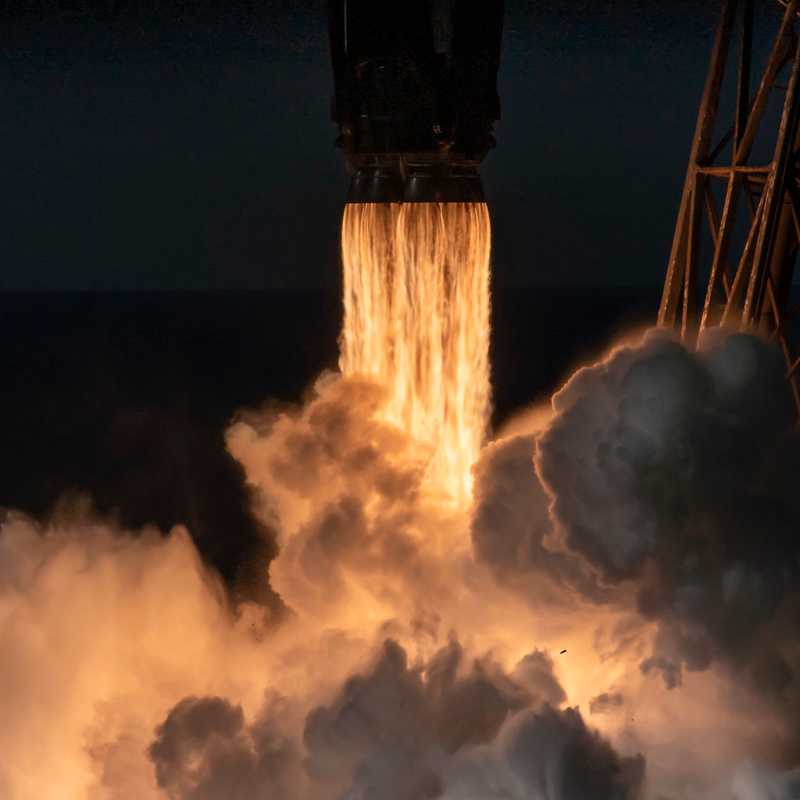
This is a Crew Dragon flight for a private company Axiom Space. The mission will carry a professionally trained commander alongside three private astronauts to and from the International Space Station. This crew will stay aboard space station for at least eight days.
Launch trajectory and telemetry simulations provided by Flight Club - a rocket launch simulator and orbital trajectory visualiser for all things space!

Successful launch onto the rendezvous trajectory with the ISS
Liftoff

Livestream has started

Weather 60%
Updated launch date confirmed by NASA
Falcon 9 is a two-stage rocket designed and manufactured by SpaceX for the reliable and safe transport of satellites and the Dragon spacecraft into orbit. The Block 5 variant is the fifth major interval aimed at improving upon the ability for rapid reusability.
See DetailsThe Falcon 9 first stage has successfully landed back at the launch site after this flight.
Result: Successful Return to Launch Site landing at Landing Zone 1.Crew Dragon spacecraft first used for Crew-4.
Crew Dragon 2 Details
Date of
Birth: Feb. 9, 1960
Age: 66
Date of
Birth: July 27, 1955
Age: 70
Date of
Birth: None
Age: None
Date of
Birth: None
Age: None
Space Exploration Technologies Corp., known as SpaceX, is an American aerospace manufacturer and space transport services company headquartered in Hawthorne, California. It was founded in 2002 by entrepreneur Elon Musk with the goal of reducing space transportation costs and enabling the colonization of Mars. SpaceX operates from many pads, on the East Coast of the US they operate from SLC-40 at Cape Canaveral Space Force Station and historic LC-39A at Kennedy Space Center. They also operate from SLC-4E at Vandenberg Space Force Base, California, usually for polar launches. Another launch site is being developed at Boca Chica, Texas.
INFO WIKI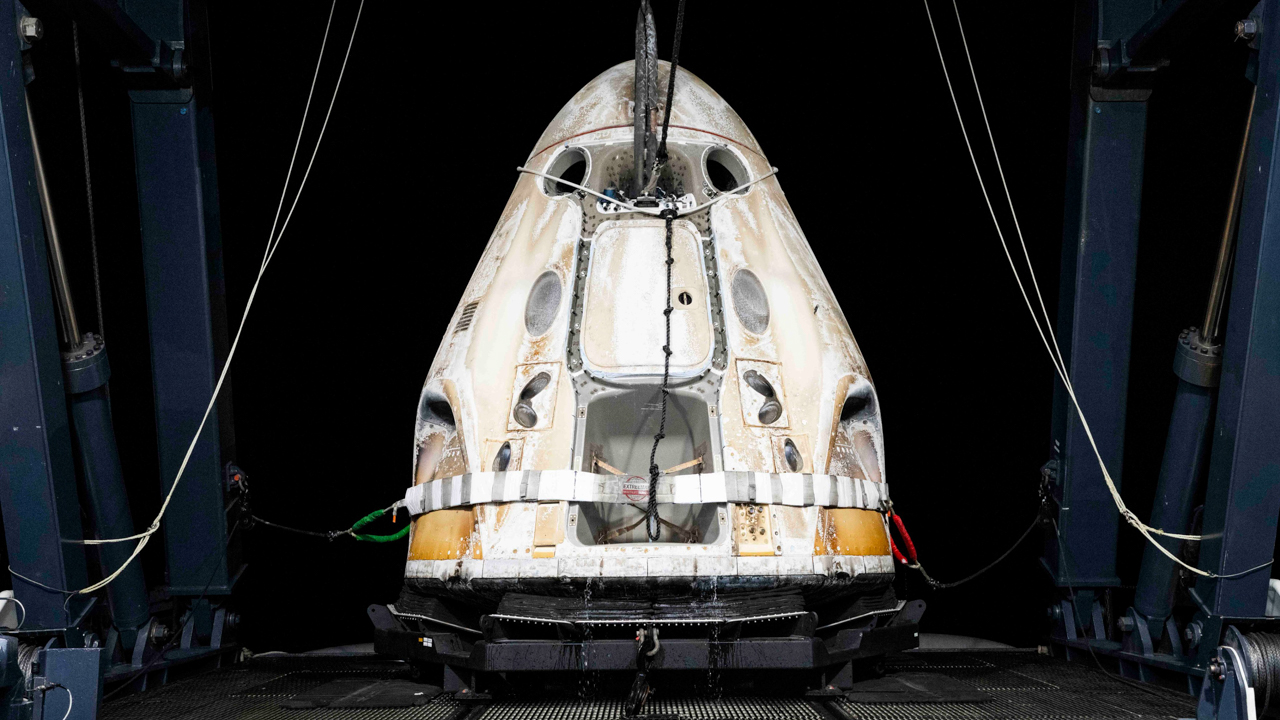
Following an 8-day stay aboard the International Space Station, the Axiom-2 crew made a fiery plunge back through Earth’s atmosphere to a...

A SpaceX Crew Dragon spacecraft splashed down in the Gulf of Mexico late May 30, concluding Axiom Space’s second private astronaut mission to the International Space Station.

The second private mission to the International Space Station (ISS) has come to a close as the four Axiom Space Axiom Mission 2 (Ax-2) astronauts returned to Earth on Tuesday, May 30. All four Ax-2 astronauts, along with the Expedition 69 …

NASA will provide live coverage of the undocking and departure of Axiom Mission 2 (Ax-2) private astronaut mission from the International Space Station before crew returns to Earth.

SpaceX delivered another quartet of astronauts to the International Space Station on Monday morning, on a private flight that included government astronauts from Saudi Arabia as the Arab kingdom leverages U.S. companies to expands its ambi…
A batch of 5 Low Earth Orbit communication satellites for the Chinese state owned SatNet constellation operated by the China Satellite Network Group.…
18 Low Earth Orbit communication satellites with Ku, Q and V band payloads for the G60 constellation operated by Shanghai Spacesail Technologies with…
STP-S29A is a mission under the U.S. Department of Defense's Space Test Program (STP) that will deliver technology demonstrations to orbit and contri…
A batch of 25 satellites for the Starlink mega-constellation - SpaceX's project for space-based Internet communication system.
Amazon Leo, formerly known as Project Kuiper, is a mega constellation of satellites in Low Earth Orbit that will offer broadband internet access, thi…
Note: Payload identity uncertain. Meridian is a series of communications satellite for military and civilian use.
First test launch of Space Pioneer’s Tianlong-3 rocket.
A batch of 29 satellites for the Starlink mega-constellation - SpaceX's project for space-based Internet communication system.
Artemis II is the first crewed mission as part of the Artemis program. Artemis II will send a crew of 4 - 3 Americans and 1 Canadian around the moon …
A batch of 29 satellites for the Starlink mega-constellation - SpaceX's project for space-based Internet communication system.


 View in Flightclub