Falcon 9 Block 5 | IMAP & others
Launch Successful
L - -- : -- : -- : --
Launch Window
Sept. 24, 2025, 11:30 a.m. - Sept. 24, 2025, 11:30 a.m.


Sept. 24, 2025, 11:30 a.m. - Sept. 24, 2025, 11:30 a.m.
IMAP (Interstellar Mapping and Acceleration Probe) is a NASA mission to study interactions between solar wind and the local interstellar medium. Carrying a suite of 10 scientific instruments, IMAP is able to investigate how particles are accelerated, determine their composition, as well as help to advance space weather forecasting models. The IMAP launch also includes the space weather satellite SWFO-L1 (Space Weather Follow-On - L1) for NOAA and the GLIDE (Global Lyman-alpha Imagers of the Dynamic Exosphere/Carruthers Geocorona Observatory) mission to study far ultraviolet emission in the Earth's exosphere.
Launch trajectory and telemetry simulations provided by Flight Club - a rocket launch simulator and orbital trajectory visualiser for all things space!

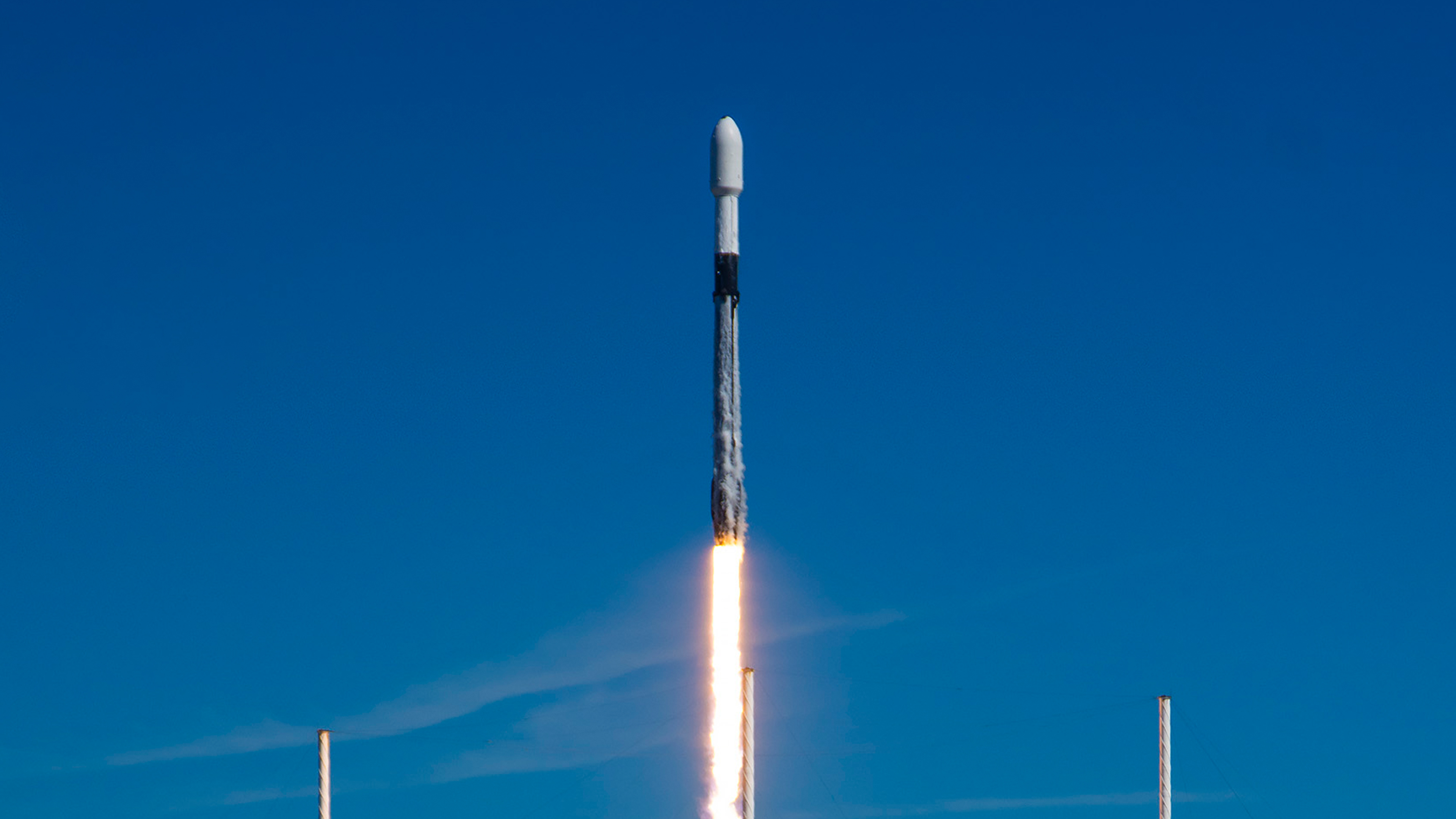
Launch success with acquisition of signal from all 3 spacecraft.
Liftoff.

Official Webcast by NASA has started

Now targeting Sep 24 at 11:30:50 UTC
Weather is 90% favorable for launch.
Falcon 9 is a two-stage rocket designed and manufactured by SpaceX for the reliable and safe transport of satellites and the Dragon spacecraft into orbit. The Block 5 variant is the fifth major interval aimed at improving upon the ability for rapid reusability.
See DetailsThe Falcon 9 1st stage B1096 has landed on ASDS JRTI after its 2nd flight.
Result: Successful Autonomous Spaceport Drone Ship landing at Just Read the Instructions.Space Exploration Technologies Corp., known as SpaceX, is an American aerospace manufacturer and space transport services company headquartered in Hawthorne, California. It was founded in 2002 by entrepreneur Elon Musk with the goal of reducing space transportation costs and enabling the colonization of Mars. SpaceX operates from many pads, on the East Coast of the US they operate from SLC-40 at Cape Canaveral Space Force Station and historic LC-39A at Kennedy Space Center. They also operate from SLC-4E at Vandenberg Space Force Base, California, usually for polar launches. Another launch site is being developed at Boca Chica, Texas.
INFO WIKI
Greenbelt MD (SPX) Feb 03, 2026 NASAs IMAP (Interstellar Mapping and Acceleration Probe) began its two-year primary science mission on Feb. 1 to explore and map the boundaries of our heliosphere - the protective bubble created by the …

SAN FRANCISCO — The National Oceanic and Atmospheric Administration’s latest space weather observatory has reached Lagrange point 1. The Space Weather Follow On — Lagrange 1 executed its final engine […] The post NOAA solar observatory re…

Two NASA heliophysics missions launched together in September are performing well, while a third mission launched earlier this year is beginning limited operations despite problems with one spacecraft. The post Heliophysics missions move …
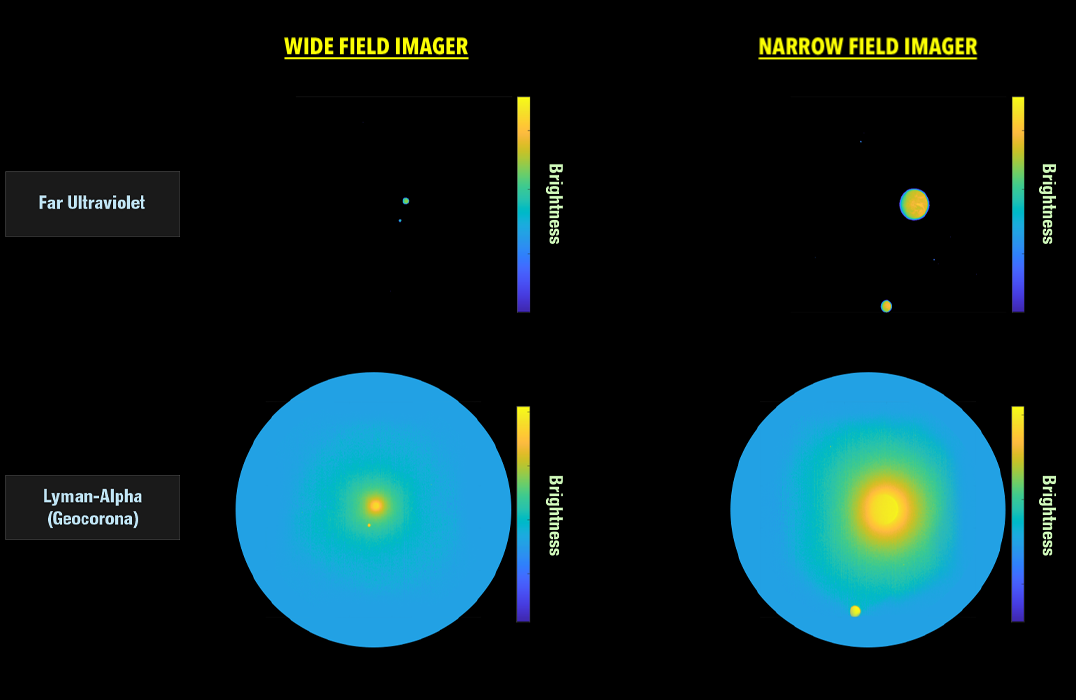
NASA’s Carruthers Geocorona Observatory has captured its first images from space, revealing rare views of Earth and the Moon in ultraviolet light. Taken on Nov. 17 — still months before the mission’s science phase begins — these “first lig…
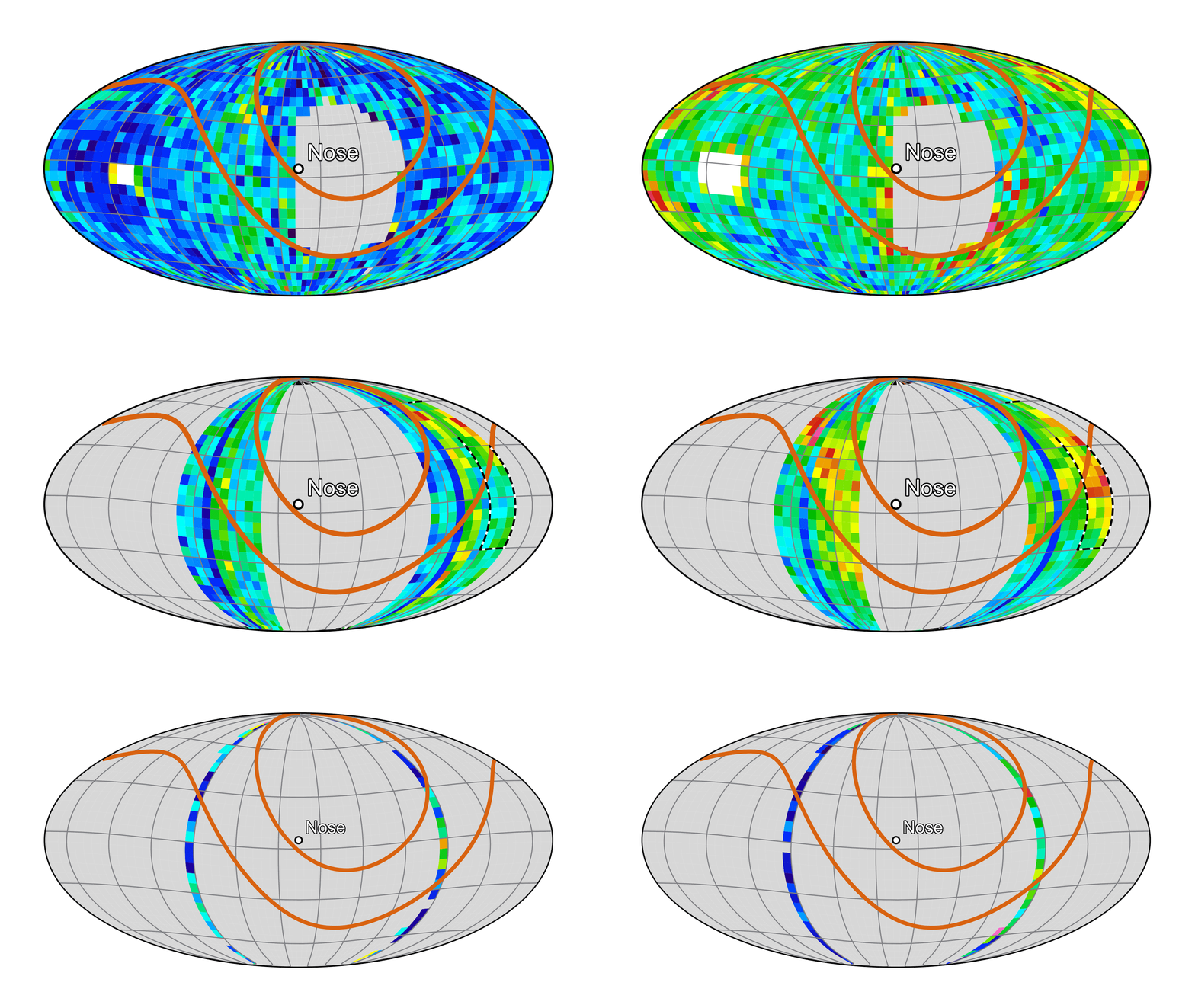
All 10 instruments aboard NASA’s newly launched IMAP (Interstellar Mapping and Acceleration Probe) mission have successfully recorded their first measurements in space. With these “first light” observations, the spacecraft is now collectin…
A batch of 5 Low Earth Orbit communication satellites for the Chinese state owned SatNet constellation operated by the China Satellite Network Group.…
18 Low Earth Orbit communication satellites with Ku, Q and V band payloads for the G60 constellation operated by Shanghai Spacesail Technologies with…
STP-S29A is a mission under the U.S. Department of Defense's Space Test Program (STP) that will deliver technology demonstrations to orbit and contri…
A batch of 25 satellites for the Starlink mega-constellation - SpaceX's project for space-based Internet communication system.
Amazon Leo, formerly known as Project Kuiper, is a mega constellation of satellites in Low Earth Orbit that will offer broadband internet access, thi…
Note: Payload identity uncertain. Meridian is a series of communications satellite for military and civilian use.
First test launch of Space Pioneer’s Tianlong-3 rocket.
A batch of 29 satellites for the Starlink mega-constellation - SpaceX's project for space-based Internet communication system.
Artemis II is the first crewed mission as part of the Artemis program. Artemis II will send a crew of 4 - 3 Americans and 1 Canadian around the moon …
A batch of 29 satellites for the Starlink mega-constellation - SpaceX's project for space-based Internet communication system.





 View in Flightclub