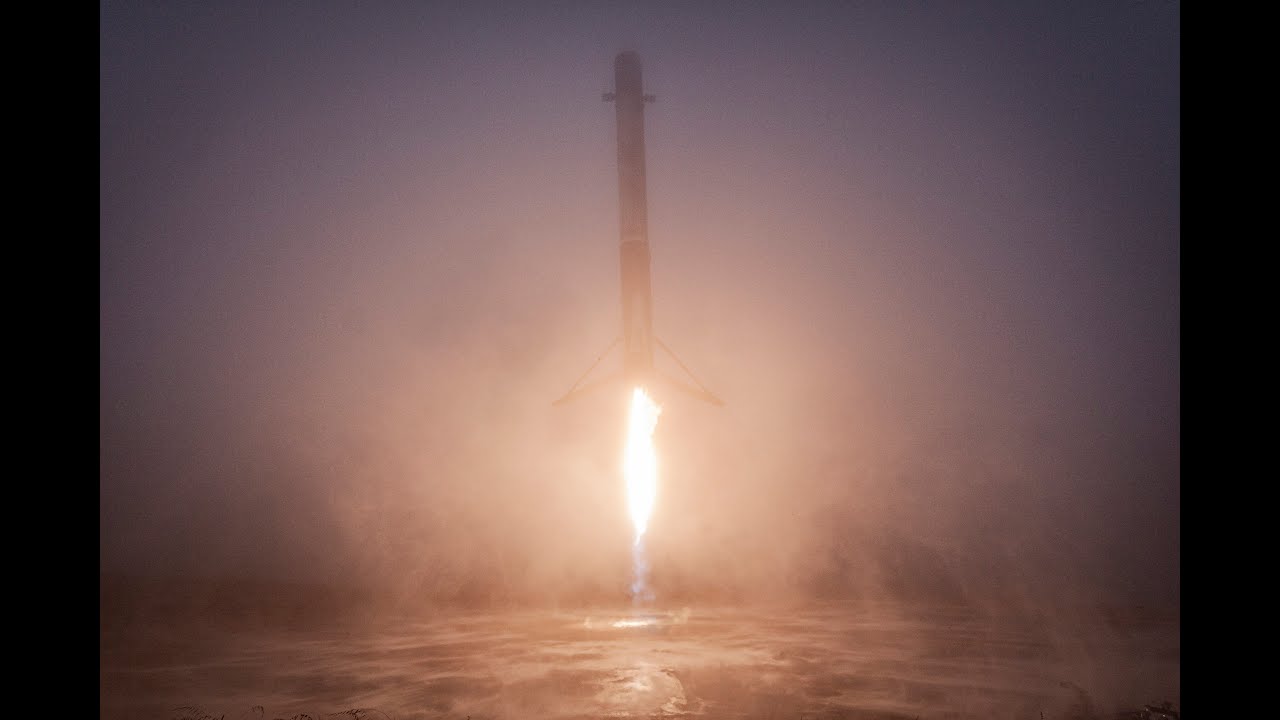
Falcon 9 Block 5 | RADARSAT Constellation
Launch Successful
L - -- : -- : -- : --
Instantaneous launch window.
Launch Window
June 12, 2019, 2:17 p.m. - June 12, 2019, 2:17 p.m.


Instantaneous launch window.
June 12, 2019, 2:17 p.m. - June 12, 2019, 2:17 p.m.
The Radarsat Constellation Mission is a follow-on project to RADARSAT-2 currently developed by MDA. The constellation will consist of a fleet of three spacecraft, and be both complementary and a follow-on to the upcoming deployment of the RADARSAT-2 mission. The primary purpose of the RCM is to provide C-Band data continuity for RADARSAT-2 users, as well as adding a new series of applications enabled through the constellation approach. The main uses of RCM are expected to be in the areas of: maritime surveillance (ship detection, ice monitoring, and oil spill detection), disaster management, ecosystem monitoring. The primary areas of interest are the landmass of Canada and its surrounding Arctic, Pacific and Atlantic maritime areas. The images and derived information are required to be provided to Canadian government users at frequent area coverage rates. Contrary to the earlier RadarSat missions, the imagery will not be available commercially. The spacecraft Payload will consist of a Synthetic Aperture Radar (SAR) sensor integrated with an Automated Identification System (AIS). The SAR Payload concept is a 2-panel deployable SAR antenna of length approximately 7 meters.
Falcon 9 is a two-stage rocket designed and manufactured by SpaceX for the reliable and safe transport of satellites and the Dragon spacecraft into orbit. The Block 5 variant is the fifth major interval aimed at improving upon the ability for rapid reusability.
See DetailsThe Falcon 9 first stage core B1051 will attempt to land at LZ-4.
Result: Successful Return to Launch Site landing at Landing Zone 4.Space Exploration Technologies Corp., known as SpaceX, is an American aerospace manufacturer and space transport services company headquartered in Hawthorne, California. It was founded in 2002 by entrepreneur Elon Musk with the goal of reducing space transportation costs and enabling the colonization of Mars. SpaceX operates from many pads, on the East Coast of the US they operate from SLC-40 at Cape Canaveral Space Force Station and historic LC-39A at Kennedy Space Center. They also operate from SLC-4E at Vandenberg Space Force Base, California, usually for polar launches. Another launch site is being developed at Boca Chica, Texas.
INFO WIKI


A batch of 29 satellites for the Starlink mega-constellation - SpaceX's project for space-based Internet communication system.
Artemis II is the first crewed mission as part of the Artemis program. Artemis II will send a crew of 4 - 3 Americans and 1 Canadian around the moon …
A batch of 29 satellites for the Starlink mega-constellation - SpaceX's project for space-based Internet communication system.
Dedicated rideshare flight to a sun-synchronous orbit with dozens of small microsatellites and nanosatellites for commercial and government customers.
First test launch and mission of CAS Space’s Kinetica-2 rocket, with 3 spacecraft on board: * New March 02 (Qingzhou space station cargo resupply …
The European Space Agency (ESA)'s LEO-PNT (Low Earth Orbit Positioning, Navigation and Timing) demonstrator mission will feature a 10-satellite const…
Chinese satellite reported to be for "space environment research" purposes. Actual usage not known.
A batch of 25 satellites for the Starlink mega-constellation - SpaceX's project for space-based Internet communication system.
Commercial Synthetic-aperture radar Earth observation satellites built by CAST for China Siwei Survey and Mapping Technology Co. Ltd.
Note: Payload identities uncertain. Batch of 16 Rassvet-3 Low Earth Orbit communication satellites for the Russian Byuro-1440 (Bureau 1440) conste…