H-IIA 202 | JDRS-1
Launch Successful
L - -- : -- : -- : --
Launch Window
Nov. 29, 2020, 7:25 a.m. - Nov. 29, 2020, 8:49 a.m.


Nov. 29, 2020, 7:25 a.m. - Nov. 29, 2020, 8:49 a.m.
JDRS-1 is a Japanese Data Relay Satellite.

Launch success confirmed.
Refined launch window.

Setting GO per NOTAM P3975/20
H-IIA (H2A) is an active expendable launch system operated by Mitsubishi Heavy Industries (MHI) for the Japan Aerospace Exploration Agency. The liquid-fueled H-IIA rockets have been used to launch satellites into geostationary orbit, to launch a lunar orbiting spacecraft, and to launch Akatsuki, which studied the planet Venus. Launches occur at the Tanegashima Space Center.
Mitsubishi Heavy Industries, Ltd. is a Japanese multinational engineering, electrical equipment and electronics company headquartered in Tokyo, Japan. MHI is one of the core companies of the Mitsubishi Group. MHI's products include aerospace components, air conditioners, aircraft, automotive components, forklift trucks, hydraulic equipment, machine tools, missiles, power generation equipment, printing machines, ships and space launch vehicles. Through its defense-related activities, it is the world's 23rd-largest defense contractor measured by 2011 defense revenues and the largest based in Japan.
INFO WIKI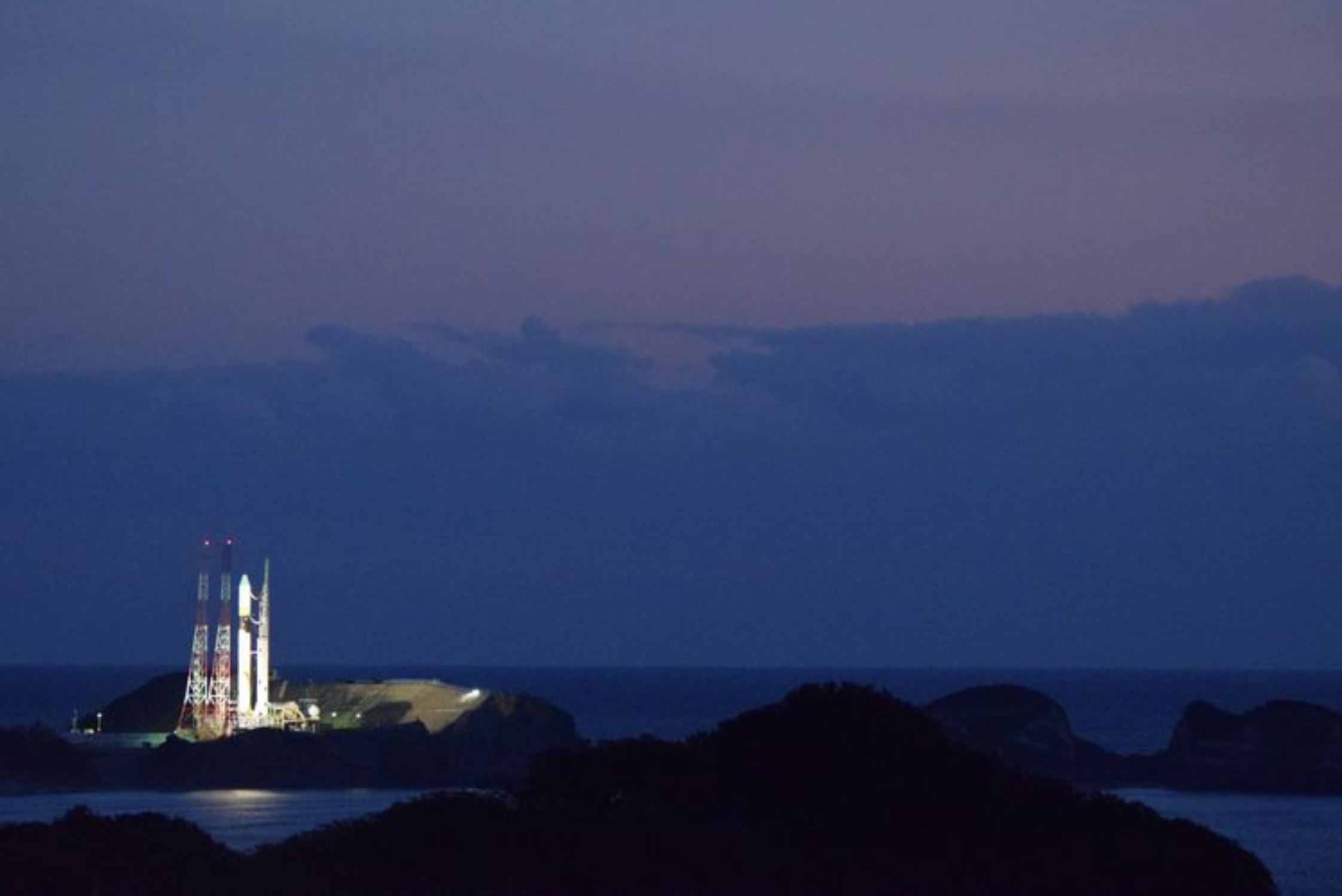
Japan has a new data relay satellite headed for geostationary orbit following successful launch of JDRS-1 on a Mitsubishi Heavy Industries’ H-IIA rocket Sunday.

A Japanese satellite designed to relay data and imagery from civilian and military Earth observation spacecraft launched Sunday aboard an H-2A rocket.

Mitsubishi Heavy Industries of Japan plans launched an H-IIA rocket on Sunday, 29 November to deploy a top secret communications satellite to support the country’s reconnaissance and scientific programs.
A batch of 25 satellites for the Starlink mega-constellation - SpaceX's project for space-based Internet communication system.
Amazon Leo, formerly known as Project Kuiper, is a mega constellation of satellites in Low Earth Orbit that will offer broadband internet access, thi…
Note: Payload identity uncertain. Meridian is a series of communications satellite for military and civilian use.
First test launch of Space Pioneer’s Tianlong-3 rocket.
A batch of 29 satellites for the Starlink mega-constellation - SpaceX's project for space-based Internet communication system.
Artemis II is the first crewed mission as part of the Artemis program. Artemis II will send a crew of 4 - 3 Americans and 1 Canadian around the moon …
A batch of 29 satellites for the Starlink mega-constellation - SpaceX's project for space-based Internet communication system.
Dedicated rideshare flight to a sun-synchronous orbit with dozens of small microsatellites and nanosatellites for commercial and government customers.
First test launch and mission of CAS Space’s Kinetica-2 rocket, with 3 spacecraft on board: * New March 02 (Qingzhou space station cargo resupply …
The European Space Agency (ESA)'s LEO-PNT (Low Earth Orbit Positioning, Navigation and Timing) demonstrator mission will feature a 10-satellite const…