H-IIB 304 | Kounotori 1 (HTV-1)
Launch Successful
L - -- : -- : -- : --
Instantaneous launch window.
Launch Window
Sept. 10, 2009, 5:01 p.m. - Sept. 10, 2009, 5:01 p.m.


Instantaneous launch window.
Sept. 10, 2009, 5:01 p.m. - Sept. 10, 2009, 5:01 p.m.
Maiden flight of the uncrewed cargo spacecraft to International Space Station.
H-IIB (H2B) is an expendable launch system used to launch H-II Transfer Vehicles (HTV, or Kounotori) towards the International Space Station. H-IIB rockets are liquid-fuelled with solid-fuel strap-on boosters and are launched from the Tanegashima Space Center in Japan. Mitsubishi and JAXA have been primarily responsible for design, manufacture, and operation of H-IIB.
HTV-1, also known as the HTV Demonstration Flight or HTV Technical Demonstration Vehicle, was the first Japanese Space Agency (JAXA) H-II Transfer Vehicle, launched in September 2009 to resupply the International Space Station and support the JAXA Kibo laboratory or JEM. It was an unmanned cargo spacecraft carrying a mixture of pressurised and unpressurised cargo to the space station. After a 52-day successful mission, HTV departed the ISS on 31 October 2009 after being released by the station's robotic arm. The spacecraft re-entered the Earth's atmosphere on 2 November and disintegrated on re-entry as planned.
H-II Transfer Vehicle (HTV) DetailsMitsubishi Heavy Industries, Ltd. is a Japanese multinational engineering, electrical equipment and electronics company headquartered in Tokyo, Japan. MHI is one of the core companies of the Mitsubishi Group. MHI's products include aerospace components, air conditioners, aircraft, automotive components, forklift trucks, hydraulic equipment, machine tools, missiles, power generation equipment, printing machines, ships and space launch vehicles. Through its defense-related activities, it is the world's 23rd-largest defense contractor measured by 2011 defense revenues and the largest based in Japan.
INFO WIKI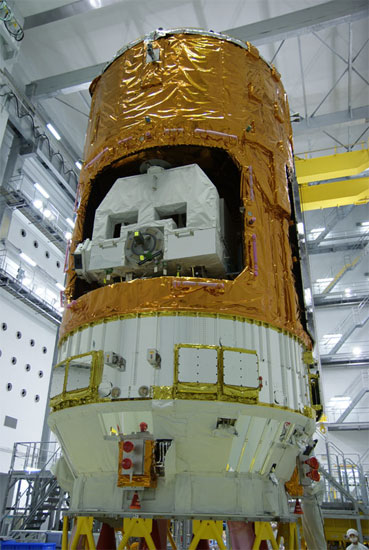
On Sept. 10, 2009, the Japan Aerospace Exploration Agency (JAXA) launched its first cargo delivery spacecraft, the H-II Transfer Vehicle-1 (HTV-1), to the International Space Station. The HTV cargo vehicles, also called Kounotori, meaning …
Ride-share launch of 8 satellites to sun-synchronous orbit. Details TBD.
The Yaogan 50-02 is a Chinese military “remote sensing” satellite of unknown purposes.
A batch of 29 satellites for the Starlink mega-constellation - SpaceX's project for space-based Internet communication system.
A batch of 25 satellites for the Starlink mega-constellation - SpaceX's project for space-based Internet communication system.
A pair of Chinese satellites reported to be for "Earth observation technological testing and validation" purposes. Actual usage not known.
A batch of 9 Low Earth Orbit communication satellites for the Chinese state owned SatNet constellation operated by the China Satellite Network Group.…
Firefly Alpha's Flight 7 is a test flight and return-To-Flight for the launch vehicle after its April 2025 launch failure. It will test and validate …
EchoStar 25 is a direct broadcast satellite, built on the proven Maxar 1300 series platform, which will deliver content across North America. It will…
A batch of 25 satellites for the Starlink mega-constellation - SpaceX's project for space-based Internet communication system.
Note: Payload and customer identities were not publicly announced. 4th of the BlackSky Gen-3 high resolution Earth-imaging satellites.