Long March 2F/G | Chinese Reusable Space Vehicle
Launch Successful
L - -- : -- : -- : --
Launch Window
Aug. 4, 2022, 3:52 p.m. - Aug. 4, 2022, 5:40 p.m.


Aug. 4, 2022, 3:52 p.m. - Aug. 4, 2022, 5:40 p.m.
Note: Launch time is approximate. Probable reflight of the Chinese spaceplane capable of returning to Earth, which flew in orbit September 4 - 6, 2020.
Launch success officially confirmed.
Added launch based on NOTAMs; may have very high uncertainty.
The Long March 2F is a Chinese orbital carrier rocket, part of the Long March 2 rocket family. Designed to launch the crewed Shenzhou spacecraft, the Long March 2F is a human-rated two-stage version of the Long March 2E rocket, which in turn was based on the Long March 2C launch vehicle. It is launched from complex SLS at the Jiuquan Satellite Launch Center. The Long March 2F/G version includes longer boosters for increased lift capability, among other improvements.

First Chinese reusable spacecraft, apparently a spaceplane with wings per a photo taken by a US satellite. No public information of it is available. Its official name is "Chongfu Shiyong Shiyan Hangtian Qi", meaning "Reusable Experimental Spacecraft". Note: It is unknown how many flight vehicles have been built and flown.
Chinese Reusable Space Vehicle DetailsThe China Aerospace Science and Technology Corporation (CASC) is the main contractor for the Chinese space program. It is state-owned and has a number of subordinate entities which design, develop and manufacture a range of spacecraft, launch vehicles, strategic and tactical missile systems, and ground equipment. It was officially established in July 1999 as part of a Chinese government reform drive, having previously been one part of the former China Aerospace Corporation. Various incarnations of the program date back to 1956.
INFO WIKI
China’s secretive reusable spaceplane has completed its second mission, successfully landing on May 8th after spending 276 days in orbit.

China’s secretive spaceplane may have performed multiple recaptures of an object it released into orbit during its recently completed second flight as part of on-orbit testing.

China plans to continue its ongoing supply chain for the Tiangong Space Station (TSS) by launching the Tianzhou-6 mission. The launch occurred at 13:25 UTC on May 10 and lofted a Tianzhou capsule on top of a Chang Zheng 7 (Long March 7).

China’s secretive reusable spaceplane completed its second mission Monday, landing after 276 days in orbit.
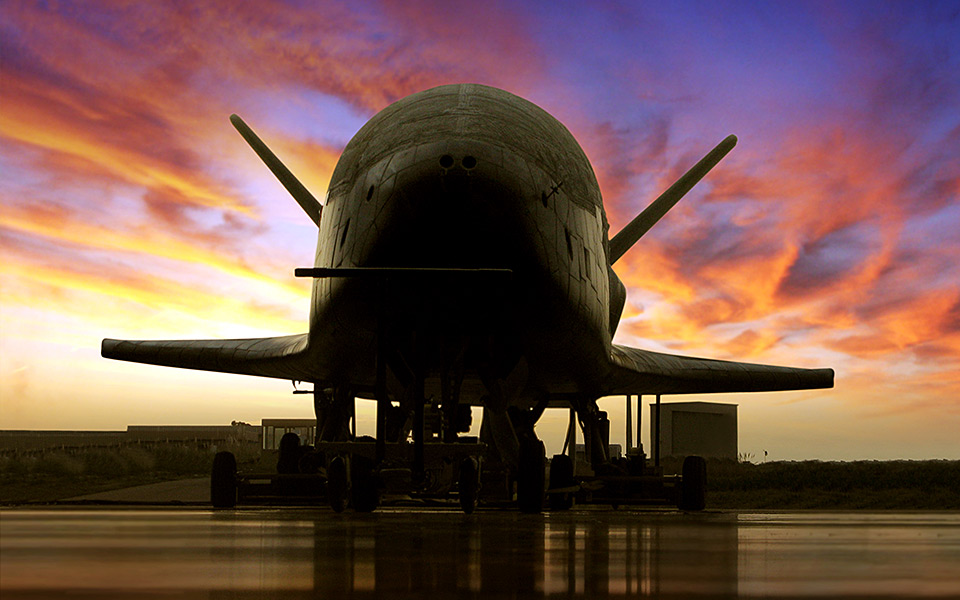
China’s secretive reusable spaceplane has released an object into orbit, according to tracking data from the U.S. Space Force.
A batch of 25 satellites for the Starlink mega-constellation - SpaceX's project for space-based Internet communication system.
A batch of 29 satellites for the Starlink mega-constellation - SpaceX's project for space-based Internet communication system.
A batch of 28 satellites for the Starlink mega-constellation - SpaceX's project for space-based Internet communication system.
A batch of 25 satellites for the Starlink mega-constellation - SpaceX's project for space-based Internet communication system.
A batch of 29 satellites for the Starlink mega-constellation - SpaceX's project for space-based Internet communication system. First Starlink laun…
A batch of 29 satellites for the Starlink mega-constellation - SpaceX's project for space-based Internet communication system.
A batch of 24 satellites for the Starlink mega-constellation - SpaceX's project for space-based Internet communication system.
SpaceX Crew-12 is the twelfth crewed operational flight of a Crew Dragon spacecraft to the International Space Station as part of NASA's Commercial C…
Amazon Leo, formerly known as Project Kuiper, is a mega constellation of satellites in Low Earth Orbit that will offer broadband internet access, thi…
USSF-87 will launch two identical Geosynchronous Space Situational Awareness Program (GSSAP) satellites GSSAP-7 and GSSAP-8 directly to a near-geosyn…