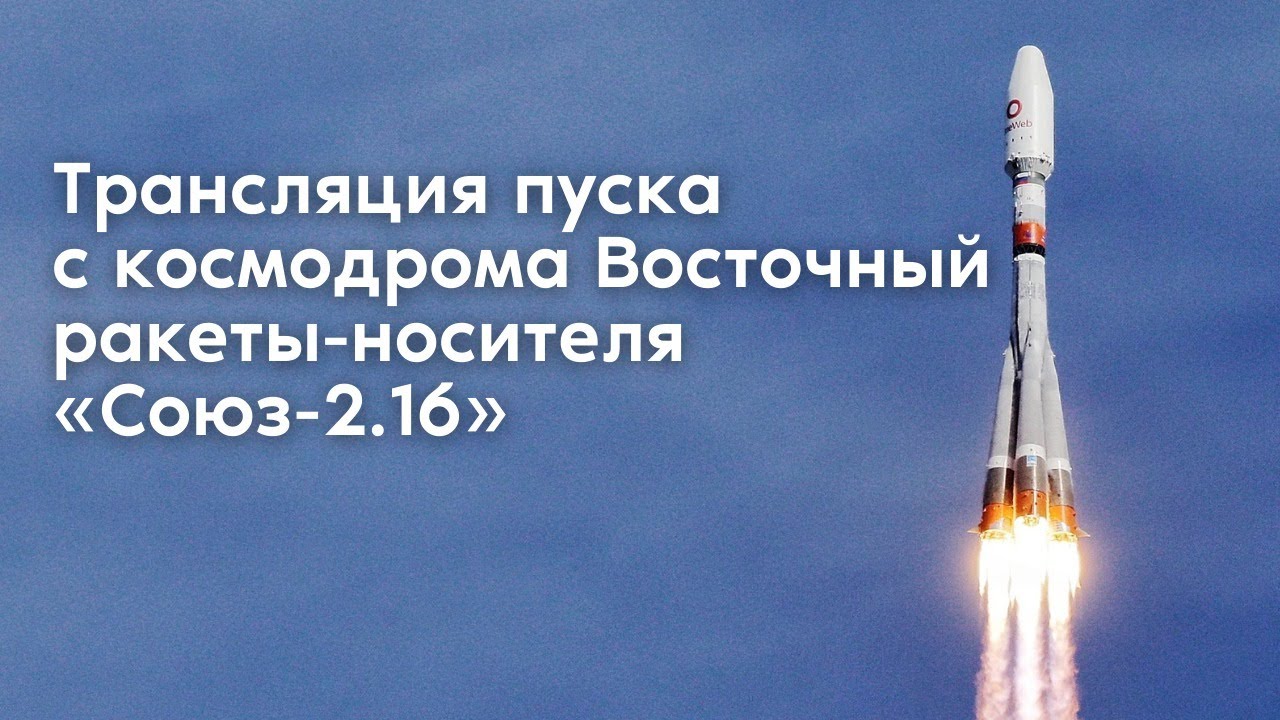
Soyuz 2.1b/Fregat-M | OneWeb 8
Launch Successful
L - -- : -- : -- : --
Instantaneous launch window.
Launch Window
July 1, 2021, 12:48 p.m. - July 1, 2021, 12:48 p.m.


Instantaneous launch window.
July 1, 2021, 12:48 p.m. - July 1, 2021, 12:48 p.m.

This 58th Soyuz mission conducted by Arianespace and its Starsem affiliate will be operated from Vostochny Cosmodrome for the fifth time and represents OneWeb’s eighth launch overall. Realizing revolution in space with a total fleet of 254 satellites in low Earth orbit. There will finally be enough...
A batch of 36 satellites for the OneWeb satellite constellation, which is intended to provide global Internet broadband service for individual consumers. The constellation is planned to have around 648 microsatellites (of which 60 are spares), around 150 kg each, operating in Ku-band from low Earth orbit.

Success confirmed

New launch time.
Soyuz-2, GRAU index 14A14, is the collective designation for the 21st-century version of the Russian Soyuz rocket. In its basic form, it is a three-stage carrier rocket for placing payloads into low Earth orbit. The first-stage boosters and two core stages feature uprated engines with improved injection systems, compared to the previous versions of the Soyuz. Digital flight control and telemetry systems allow the rocket to be launched from a fixed launch platform, whereas the launch platforms for earlier Soyuz rockets had to be rotated as the rocket could not perform a roll to change its heading in flight.
Progress Rocket Space Centre, formerly known as TsSKB-Progress, is a space science and aerospace research company which is known for manufacturing launch vehicles and satellites. Most notably, Progress Rocket Space Centre is the manufacturer of Soyuz launch vehicles.
INFO WIKI
A Russian Soyuz rocket and Fregat upper stage deployed 36 more OneWeb internet satellites into orbit Thursday, bringing the company’s fleet to 254 spacecraft, enough to start commercial service above 50 degrees latitude.
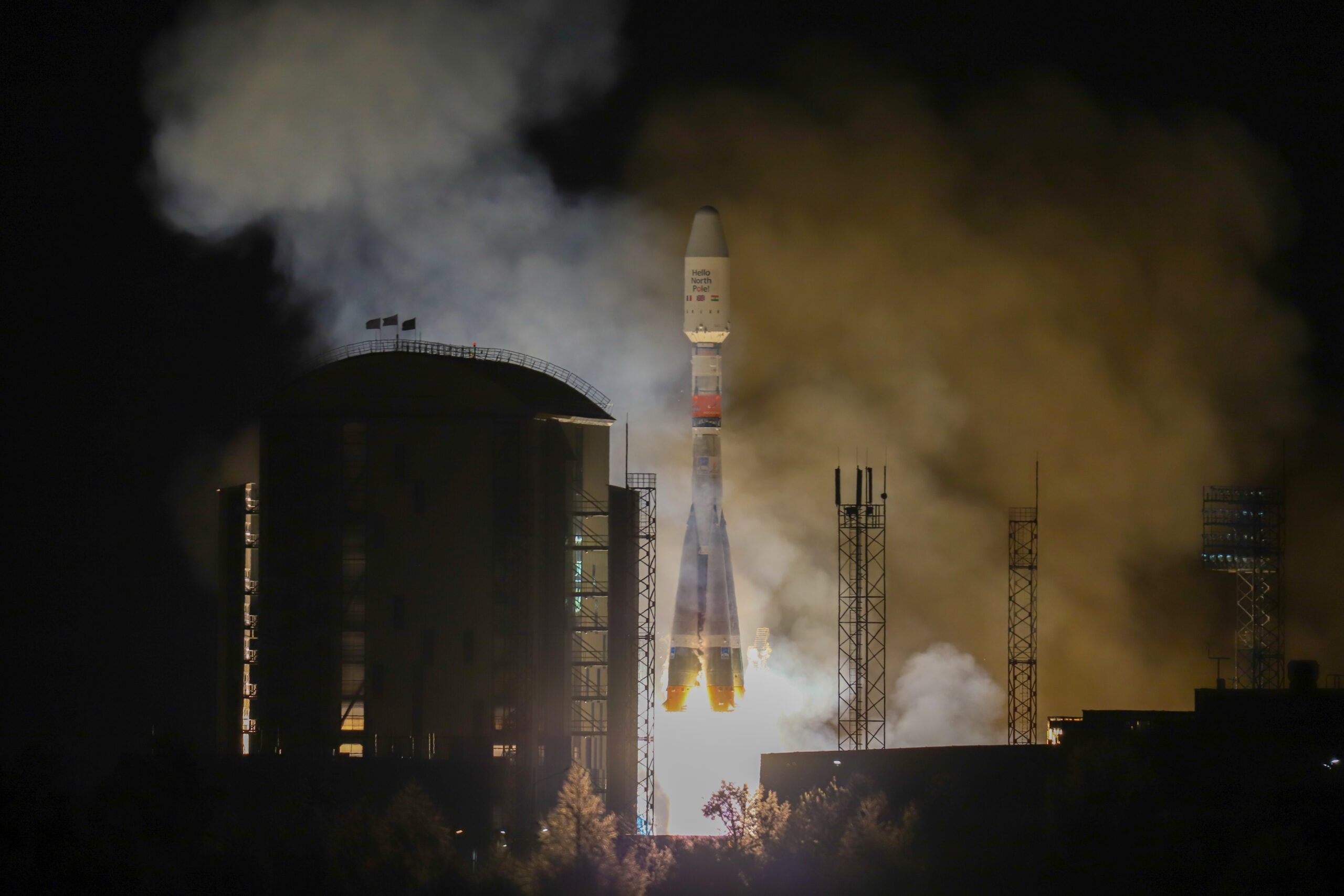
OneWeb is shifting focus to the southern hemisphere after completing coverage north of 50 degrees latitude, following the launch of its latest batch of broadband satellites July 1.

The eighth delivery of OneWeb satellites into Earth orbit lifted off at 12:48 UTC launch on Thursday, July 1 from the Vostochny Cosmodrome in Russia.
Amazon Leo, formerly known as Project Kuiper, is a mega constellation of satellites in Low Earth Orbit that will offer broadband internet access, thi…
Note: Payload identity uncertain. Meridian is a series of communications satellite for military and civilian use.
First test launch of Space Pioneer’s Tianlong-3 rocket.
A batch of 29 satellites for the Starlink mega-constellation - SpaceX's project for space-based Internet communication system.
Artemis II is the first crewed mission as part of the Artemis program. Artemis II will send a crew of 4 - 3 Americans and 1 Canadian around the moon …
A batch of 29 satellites for the Starlink mega-constellation - SpaceX's project for space-based Internet communication system.
Dedicated rideshare flight to a sun-synchronous orbit with dozens of small microsatellites and nanosatellites for commercial and government customers.
First test launch and mission of CAS Space’s Kinetica-2 rocket, with 3 spacecraft on board: * New March 02 (Qingzhou space station cargo resupply …
The European Space Agency (ESA)'s LEO-PNT (Low Earth Orbit Positioning, Navigation and Timing) demonstrator mission will feature a 10-satellite const…
Chinese satellite reported to be for "space environment research" purposes. Actual usage not known.