Titan IVB/Centaur | Cassini-Huygens
Launch Successful
L - -- : -- : -- : --
Instantaneous launch window.
Launch Window
Oct. 15, 1997, 8:43 a.m. - Oct. 15, 1997, 8:43 a.m.


Instantaneous launch window.
Oct. 15, 1997, 8:43 a.m. - Oct. 15, 1997, 8:43 a.m.

Cassini–Huygens ( kə-SEE-nee HOY-gənz), commonly called Cassini, was a space-research mission by NASA, the European Space Agency (ESA), and the Italian Space Agency (ASI) to send a space probe to study the planet Saturn and its system, including its rings and natural satellites. The Flagship-class r...
For more than a decade, NASA’s Cassini spacecraft shared the wonders of Saturn and its family of icy moons—taking us to astounding worlds where methane rivers run to a methane sea and where jets of ice and gas are blasting material into space from a liquid water ocean that might …
See Details
Lockheed Martin's Space Division started in the production of missiles and later ICBM's in the 1950s. Their TITAN missile system was used for 12 Gemini spacecraft and the Voyager probes. They have worked largely in collaboration with NASA on many of their probes, landers, and spacecraft, and hope to play a key role in NASA's return to the moon in 2024.
INFO WIKI
Los Angeles CA (SPX) Dec 18, 2025 Careful reanalysis of measurements gathered more than a decade ago indicates that Saturn's largest moon, Titan, likely lacks a vast liquid-water ocean beneath its ice, contrary to earlier interpretati…
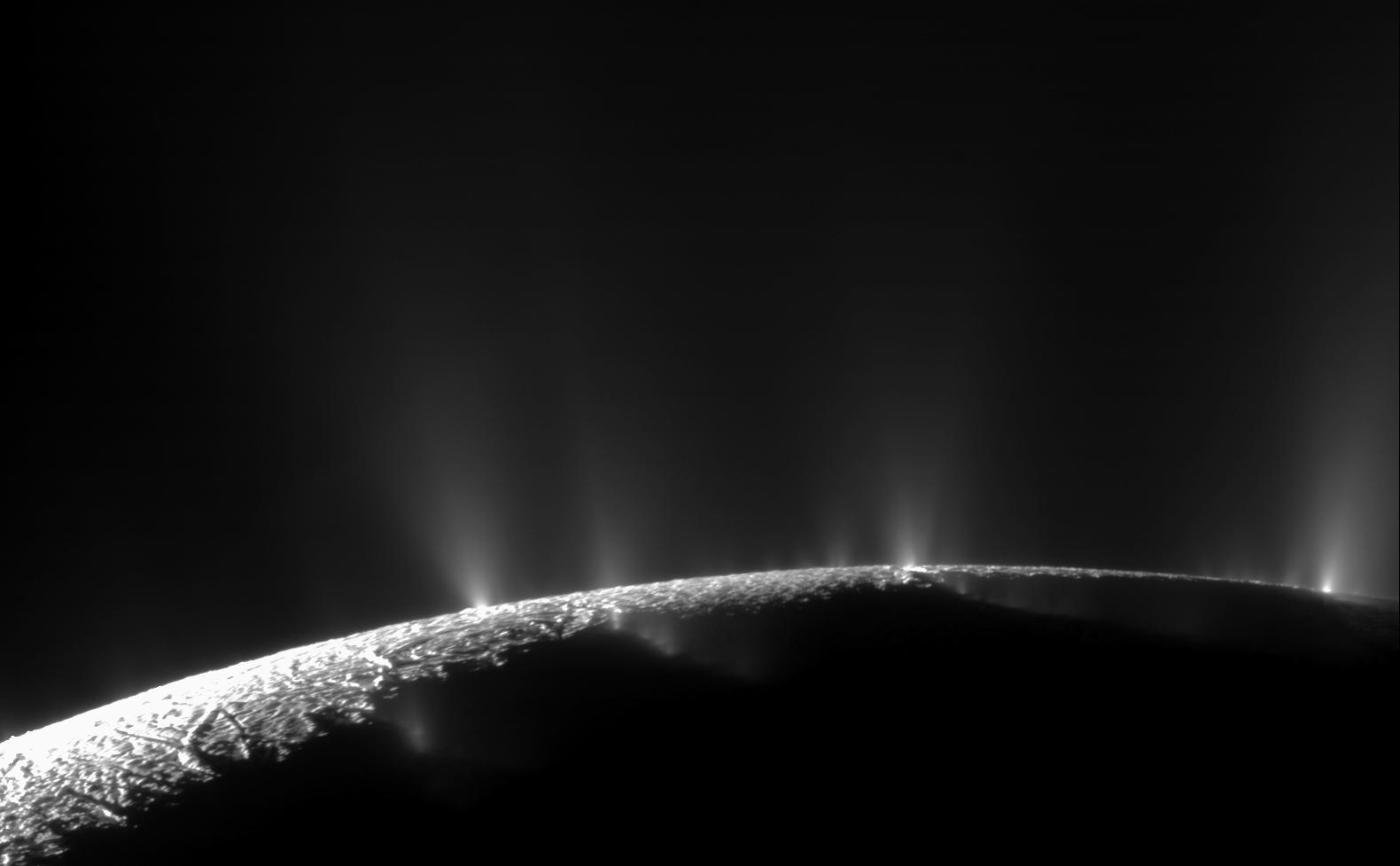
Dramatic plumes, both large and small, spray water ice out from many locations along the famed tiger stripes near the south pole of Saturn’s moon Enceladus in this image released on Feb. 23, 2010. A study published in October 2025 analyzed…

Located around Saturn is the icy moon Enceladus — one of the most interesting and… The post Scientists use Cassini data to discover new molecules in Enceladus water jets appeared first on NASASpaceFlight.com.
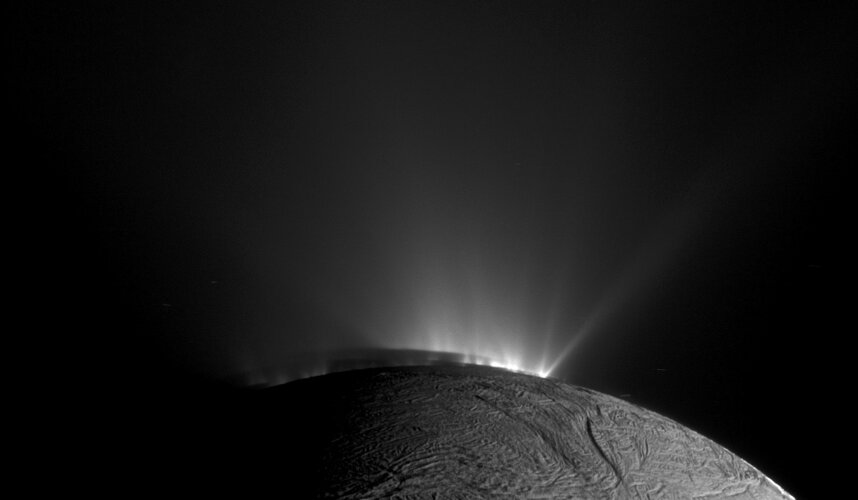
Scientists digging through data collected by the Cassini spacecraft have found new complex organic molecules spewing from Saturn’s moon Enceladus. This is a clear sign that complex chemical reactions are taking place within its underground…

The Cassini-Huygens spacecraft captured this last “eyeful” of Saturn and its rings on March 27, 2004, as it continued its way to orbit insertion. This natural color image shows the color variations between atmospheric bands and features in…
This is the 24th flight of the Orbital ATK's uncrewed resupply spacecraft Cygnus and its 23rd flight to the International Space Station under the Com…
Officially described as "Satellite-Internet Technology Demonstration Satellite". Probable 1 (?) test satellite for the Chinese state-owned LEO commun…
A batch of 25 satellites for the Starlink mega-constellation - SpaceX's project for space-based Internet communication system.
A batch of 5 Low Earth Orbit communication satellites for the Chinese state owned SatNet constellation operated by the China Satellite Network Group.…
18 Low Earth Orbit communication satellites with Ku, Q and V band payloads for the G60 constellation operated by Shanghai Spacesail Technologies with…
STP-S29A is a mission under the U.S. Department of Defense's Space Test Program (STP) that will deliver technology demonstrations to orbit and contri…
A batch of 25 satellites for the Starlink mega-constellation - SpaceX's project for space-based Internet communication system.
Amazon Leo, formerly known as Project Kuiper, is a mega constellation of satellites in Low Earth Orbit that will offer broadband internet access, thi…
Note: Payload identity uncertain. Meridian is a series of communications satellite for military and civilian use.
First test launch of Space Pioneer’s Tianlong-3 rocket.