Upcoming Spaceflight Launches
Filter by Agency, Locations or Vehicles
Show All Launches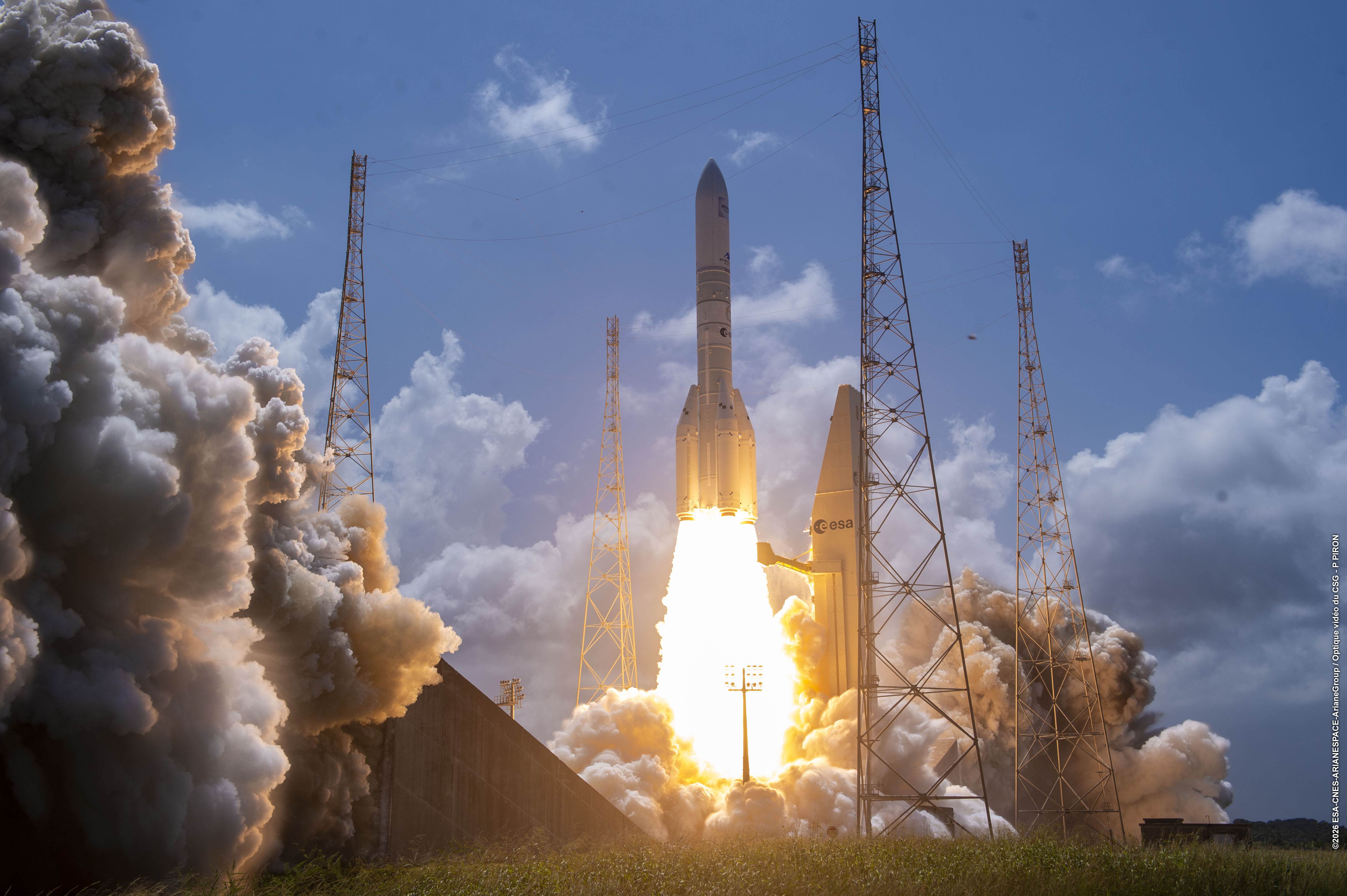
Ariane 64 | Amazon Leo (LE-02)
ArianeGroup | FranceGuiana Space Centre, French Guiana
TBD April, 2026
Status: To Be Determined
Mission:
Amazon Leo, formerly known as Project Kuiper, is a mega constellation of satellites in Low Earth Orbit that will offer broadband internet access, this constellation will be managed by Kuiper Systems LLC, a subsidiary of Amazon. This constellation is planned to be composed of 3,276 satellites. The satellites are projected to be placed in 98 orbital planes in three orbital layers, one at 590 km, 610 km and 630 km altitude. 32 satellites are carried on this launch.
Low Earth Orbit VA268Ariane 64 Block 2 | Amazon Leo (LE-03)
ArianeGroup | FranceGuiana Space Centre, French Guiana
TBD May, 2026
Status: To Be Determined
Mission:
Amazon Leo, formerly known as Project Kuiper, is a mega constellation of satellites in Low Earth Orbit that will offer broadband internet access, this constellation will be managed by Kuiper Systems LLC, a subsidiary of Amazon. This constellation is planned to be composed of 3,276 satellites. The satellites are projected to be placed in 98 orbital planes in three orbital layers, one at 590 km, 610 km and 630 km altitude. 35-40 satellites will be carried on each Ariane 6 launch.
Low Earth OrbitAriane 64 | MTG-I2
ArianeGroup | FranceGuiana Space Centre, French Guiana
TBD June, 2026
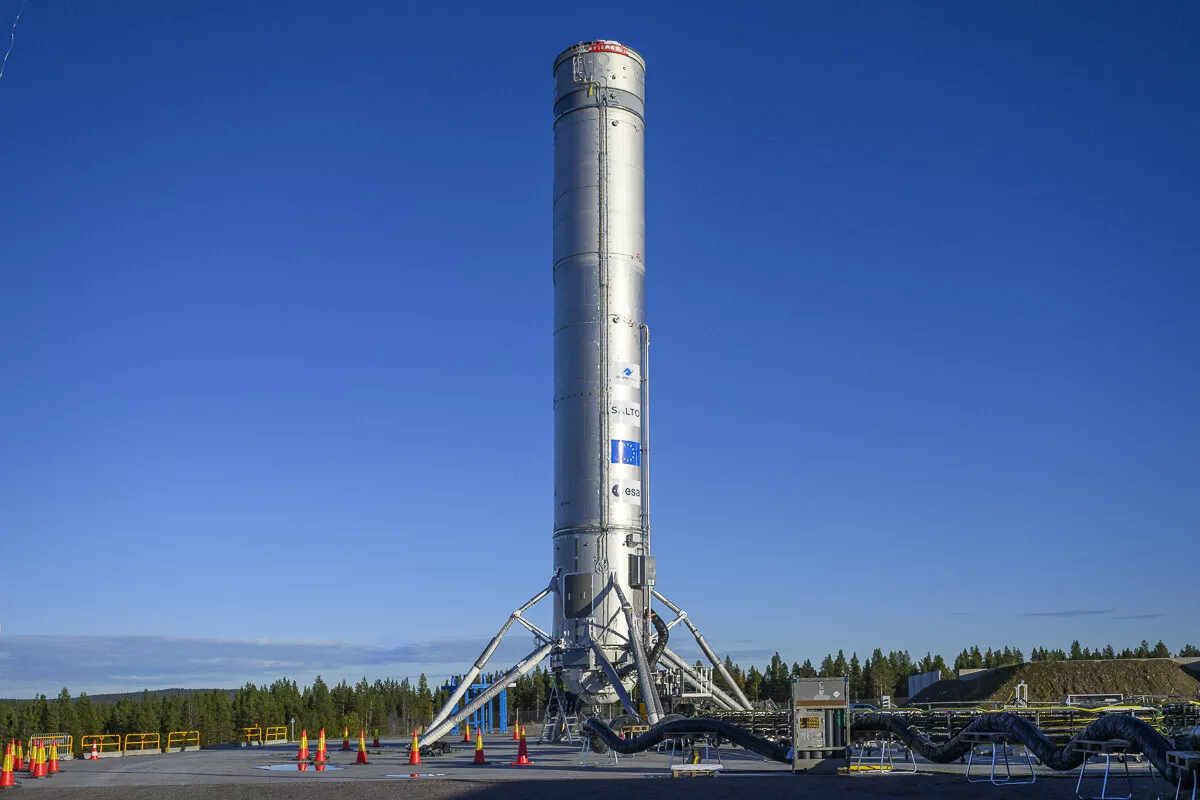
Themis Demonstrator | T1H-1
ArianeGroup | FranceEsrange Space Center
TBD June, 2026
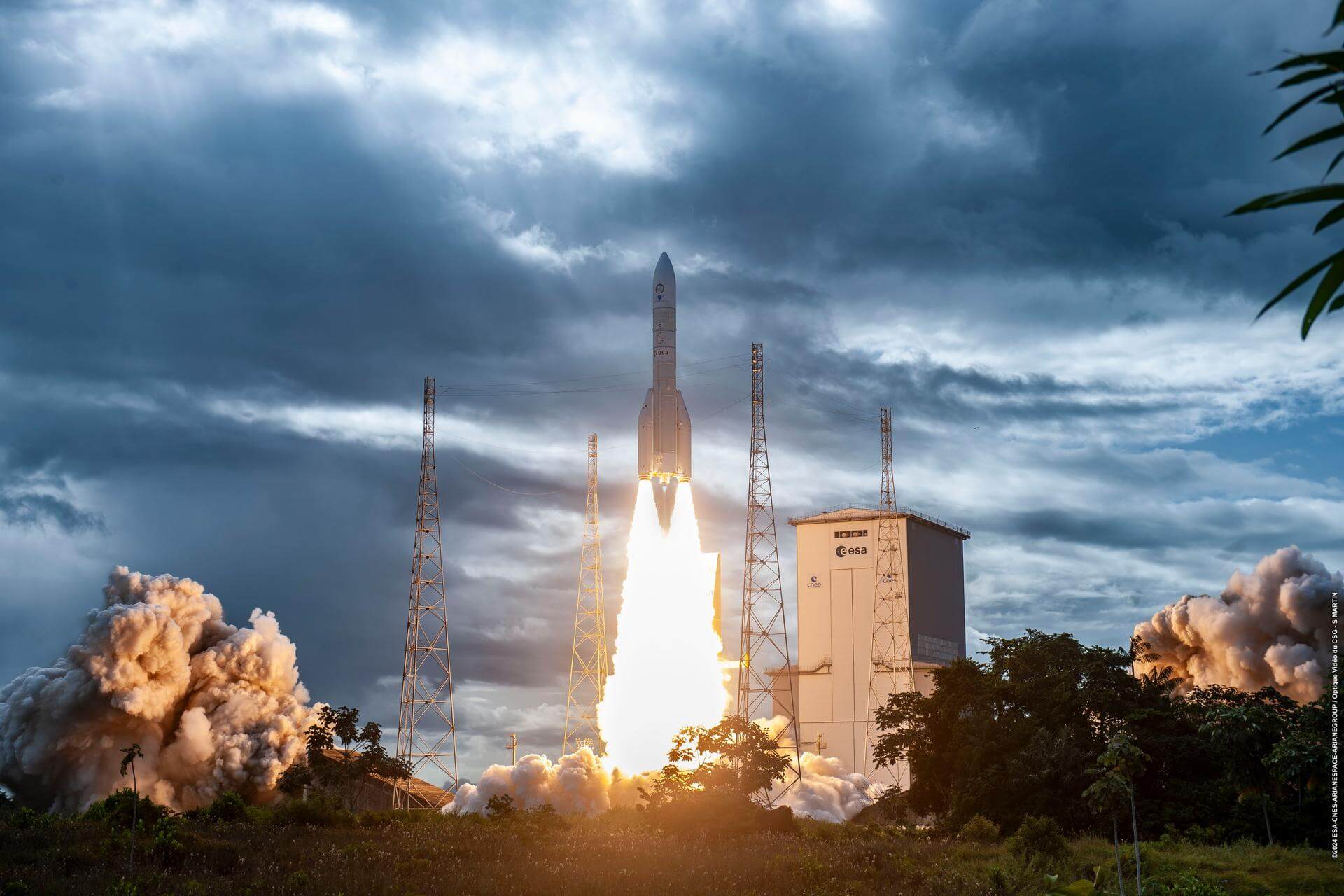
Ariane 62 | Metop-SG B1
ArianeGroup | FranceGuiana Space Centre, French Guiana
TBD October, 2026
Ariane 64 Block 2 | Amazon Leo (LE-04)
ArianeGroup | FranceGuiana Space Centre, French Guiana
TBD December, 2026
Status: To Be Determined
Mission:
Amazon Leo, formerly known as Project Kuiper, is a mega constellation of satellites in Low Earth Orbit that will offer broadband internet access, this constellation will be managed by Kuiper Systems LLC, a subsidiary of Amazon. This constellation is planned to be composed of 3,276 satellites. The satellites are projected to be placed in 98 orbital planes in three orbital layers, one at 590 km, 610 km and 630 km altitude. 35-40 satellites will be carried on each Ariane 6 launch.
Low Earth OrbitAriane 64 | GO-1
ArianeGroup | FranceGuiana Space Centre, French Guiana
TBD December, 2026
Ariane 62 | Galileo L15 (FOC FM28 & FM31)
ArianeGroup | FranceGuiana Space Centre, French Guiana
TBD December, 2026
Ariane 62 Block 2 | PLATO
ArianeGroup | FranceGuiana Space Centre, French Guiana
TBD January, 2027
Status: To Be Determined
Mission:
Plato, for PLAnetary Transits and Oscillations of stars, is a European Space Agency (ESA) mission with 26 cameras to study terrestrial exoplanets in orbits up to the habitable zone of Sun-like stars. Its goal is to measure the sizes of exoplanets and discover exomoons and rings around them, as well as characterise planets' host stars by studying tiny light variations in the starlight it receives.
Sun-Earth L2Ariane 64 | IS-45
ArianeGroup | FranceGuiana Space Centre, French Guiana
TBD March, 2027
Status: To Be Determined
Mission:
Intelsat 45 is a small geostationary communications satellite that will provide Ku-band fixed-satellite services enabling Intelsat to provide specialized and efficient service to Media and Network customers. IS-45 weighs about 1 metric ton at launch and is designed and built by SWISSto12, based on the company’s innovative HummingSat platform. HummingSats are just over one cubic meter in volume, one-tenth the size of conventional satellites placed in geostationary orbit. SWISSto12 is developing the satellites in collaboration with the European Space Agency (ESA) through its public-private-partnership program, benefiting from unique and patented 3D printing technologies.
Geostationary Transfer OrbitFalcon 9
Cygnus CRS-2 NG-24 (S.S. Steven R. Nagel)
Space Launch Complex 40 - Cape Canaveral SFS, FL, USAThis is the 24th flight of the Orbital ATK's uncrewed resupply spacecraft Cygnus and its 23rd flight to the International Space Station under the Com…
Smart Dragon 3
SatNet test satellite
South China Sea (launch location 3) - Haiyang Oriental SpaceportOfficially described as "Satellite-Internet Technology Demonstration Satellite". Probable 1 (?) test satellite for the Chinese state-owned LEO commun…
Falcon 9
Starlink Group 17-21
Space Launch Complex 4E - Vandenberg SFB, CA, USAA batch of 25 satellites for the Starlink mega-constellation - SpaceX's project for space-based Internet communication system.
Long March 6A
SatNet LEO Group 21
Launch Complex 9A - Taiyuan Satellite Launch Center, People's Republic of ChinaA batch of 5 Low Earth Orbit communication satellites for the Chinese state owned SatNet constellation operated by the China Satellite Network Group.…
Long March 8
SpaceSail Polar Group 07
Commercial LC-1 - Wenchang Space Launch Site, People's Republic of China18 Low Earth Orbit communication satellites with Ku, Q and V band payloads for the G60 constellation operated by Shanghai Spacesail Technologies with…
Minotaur IV
STP-S29A
Space Launch Complex 8 - Vandenberg SFB, CA, USASTP-S29A is a mission under the U.S. Department of Defense's Space Test Program (STP) that will deliver technology demonstrations to orbit and contri…
Falcon 9
Starlink Group 17-35
Space Launch Complex 4E - Vandenberg SFB, CA, USAA batch of 25 satellites for the Starlink mega-constellation - SpaceX's project for space-based Internet communication system.
Atlas V 551
Amazon Leo (LA-05)
Space Launch Complex 41 - Cape Canaveral SFS, FL, USAAmazon Leo, formerly known as Project Kuiper, is a mega constellation of satellites in Low Earth Orbit that will offer broadband internet access, thi…
Soyuz 2.1a/Fregat-M
Meridian-M No.21L
43/3 (43L) - Plesetsk Cosmodrome, Russian FederationNote: Payload identity uncertain. Meridian is a series of communications satellite for military and civilian use.
Tianlong-3
Demo Flight
Tianlong-3 Launch Pad - Jiuquan Satellite Launch Center, People's Republic of ChinaFirst test launch of Space Pioneer’s Tianlong-3 rocket.

