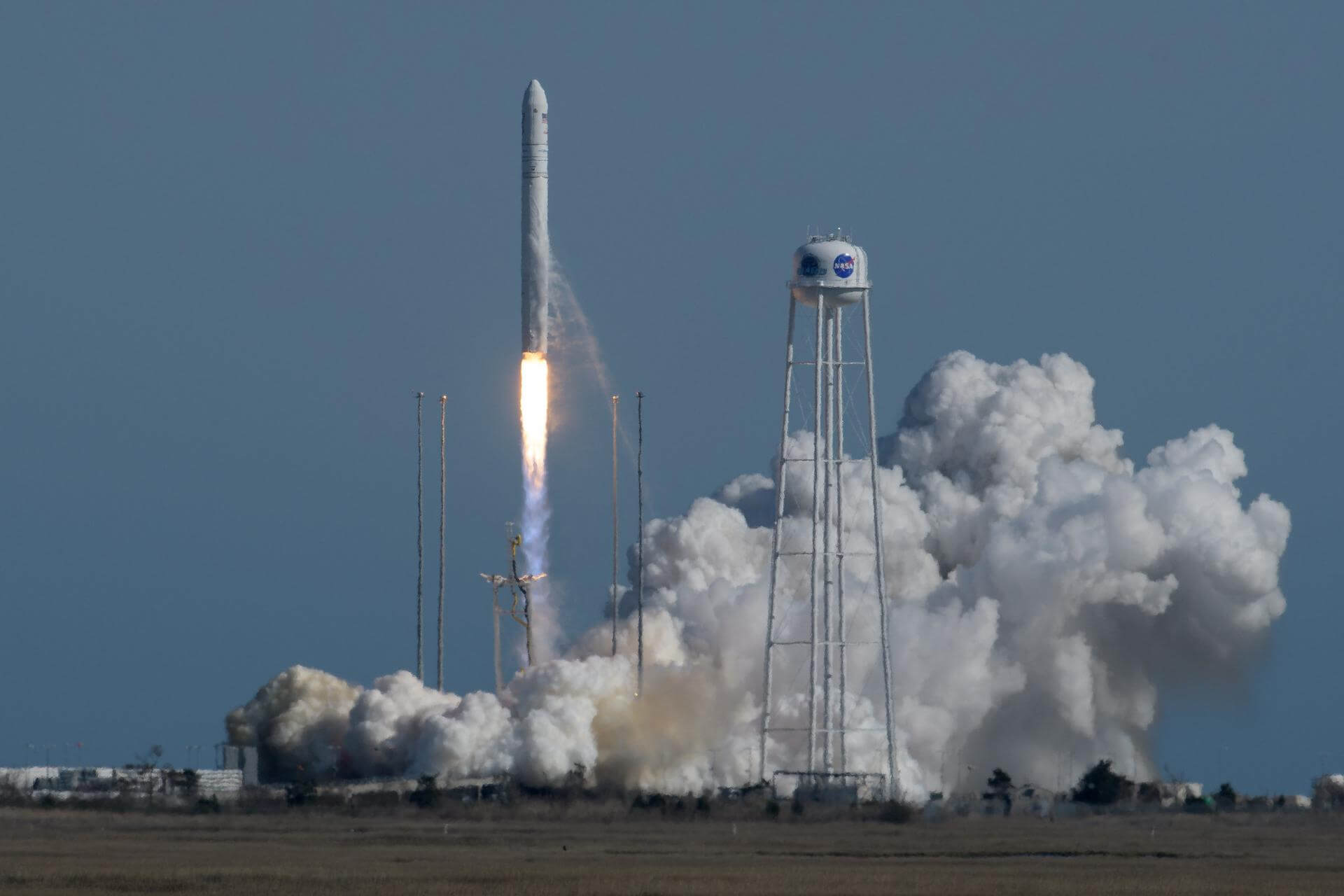
Antares 230
In-activeNorthrop Grumman Space Systems (NGSS)
Oct. 17, 2016
Description
Antares known during early development as Taurus II, is an expendable launch system developed by Orbital Sciences Corporation (now part of Northrop Grumman Innovation Systems after Northrop Grumman acquired Orbital ATK) and the Yuzhnoye Design Bureau to launch the Cygnus spacecraft to the International Space Station as part of NASA's COTS and CRS programs. Able to launch payloads heavier than 5,000 kg (11,000 lb) into low-Earth orbit, Antares is the largest rocket operated by Orbital ATK. Antares launches from the Mid-Atlantic Regional Spaceport and made its inaugural flight on April 21, 2013.
Specifications
-
Stages
3 -
Length
42.5 m -
Diameter
3.9 m -
Fairing Diameter
― -
Launch Mass
286.0 T -
Thrust
3844.0 kN
Family
-
Name
Antares 230 -
Family
― -
Variant
230 -
Alias
― -
Full Name
Antares 230
Payload Capacity
-
Launch Cost
― -
Low Earth Orbit
7800.0 kg -
Geostationary Transfer
Orbit
― -
Direct Geostationary
― -
Sun-Synchronous Capacity
―
Northrop Grumman Space Systems
Commercial
CEO: Kathy Warden
NGSS 2015Northrup Grumman Space Systems designs, builds and delivers space, defence and aviation-related systems to customers around the world. They aquired Orbital ATK in 2018 along with its launchers and ongoing missions.
Antares 230 | Cygnus CRS NG-11 (S.S. Roger Chaffee)
Northrop Grumman Space Systems | United States of AmericaWallops Flight Facility, Virginia, USA
April 17, 2019, 8:46 p.m.
Status: Launch Successful
Mission:
This is the 12th planned flight of the Orbital ATK's uncrewed resupply spacecraft Cygnus and its 11th flight to the International Space Station under the Commercial Resupply Services contract with NASA. Northrop Grumman named the vehicle after Apollo 1 astronaut Roger Chaffee.
Low Earth Orbit #NG11Antares 230 | Cygnus CRS NG-10 (S.S. John Young)
Northrop Grumman Space Systems | United States of AmericaWallops Flight Facility, Virginia, USA
Nov. 17, 2018, 9:01 a.m.
Antares 230 | Cygnus CRS OA-9 (S.S. J.R. Thompson)
Northrop Grumman Space Systems | United States of AmericaWallops Flight Facility, Virginia, USA
May 21, 2018, 8:44 a.m.
Antares 230 | Cygnus CRS OA-8 (S.S. Gene Cernan)
Northrop Grumman Space Systems | United States of AmericaWallops Flight Facility, Virginia, USA
Nov. 12, 2017, 12:19 p.m.
Antares 230 | Cygnus CRS OA-5 (S.S. Alan Poindexter)
Northrop Grumman Space Systems | United States of AmericaWallops Flight Facility, Virginia, USA
Oct. 17, 2016, 11:45 p.m.
Status: Launch Successful
Mission:
This is the seventh flight of the Orbital ATK's unmanned resupply spacecraft Cygnus and its sixth flight to the International Space Station under the Commercial Resupply Services contract with NASA. Orbital ATK named the vehicle after astronaut Alan Poindexter who was the commander of STS-131.
Low Earth OrbitFalcon 9
Starlink Group 17-35
Space Launch Complex 4E - Vandenberg SFB, CA, USAA batch of 25 satellites for the Starlink mega-constellation - SpaceX's project for space-based Internet communication system.
Atlas V 551
Amazon Leo (LA-05)
Space Launch Complex 41 - Cape Canaveral SFS, FL, USAAmazon Leo, formerly known as Project Kuiper, is a mega constellation of satellites in Low Earth Orbit that will offer broadband internet access, thi…
Soyuz 2.1a/Fregat-M
Meridian-M No.21L
43/3 (43L) - Plesetsk Cosmodrome, Russian FederationNote: Payload identity uncertain. Meridian is a series of communications satellite for military and civilian use.
Tianlong-3
Demo Flight
Tianlong-3 Launch Pad - Jiuquan Satellite Launch Center, People's Republic of ChinaFirst test launch of Space Pioneer’s Tianlong-3 rocket.
Falcon 9
Starlink Group 10-58
Space Launch Complex 40 - Cape Canaveral SFS, FL, USAA batch of 29 satellites for the Starlink mega-constellation - SpaceX's project for space-based Internet communication system.

