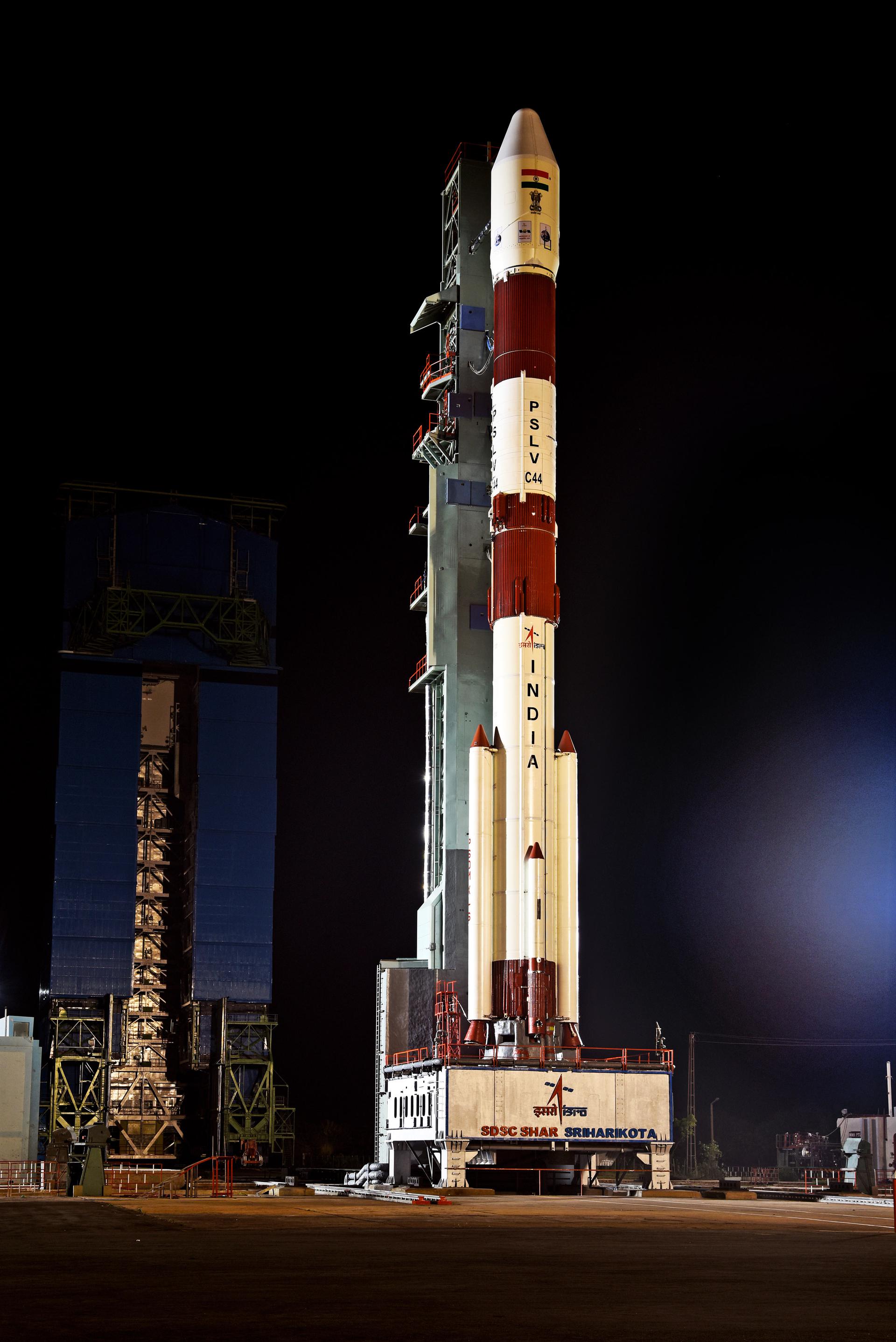
PSLV-DL
ActiveIndian Space Research Organization (ISRO)
Jan. 24, 2019
Description
PSLV-DL variant has only two strapons boosters with 12 tonne propellant load on them. PSLV-C44 on 24 January 2019 was the first flight to use PSLV-DL variant of Polar Satellite Launch Vehicle.
Specifications
-
Stages
4 -
Length
44.0 m -
Diameter
2.8 m -
Fairing Diameter
― -
Launch Mass
― -
Thrust
―
Family
-
Name
PSLV-DL -
Family
― -
Variant
DL -
Alias
― -
Full Name
PSLV-DL
Payload Capacity
-
Launch Cost
― -
Low Earth Orbit
3800.0 kg -
Geostationary Transfer
Orbit
1200.0 kg -
Direct Geostationary
― -
Sun-Synchronous Capacity
1750.0 kg
Indian Space Research Organization
Government
Chairman: V. Narayanan
ISRO 1969The Indian Space Research Organisation (ISRO) is the space agency of the Government of India headquartered in the city of Bangalore. Its vision is to "harness space technology for national development while pursuing space science research and planetary exploration."
PSLV-DL | EOS-N1 and others
Indian Space Research Organization | IndiaSatish Dhawan Space Centre, India
Jan. 12, 2026, 4:48 a.m.
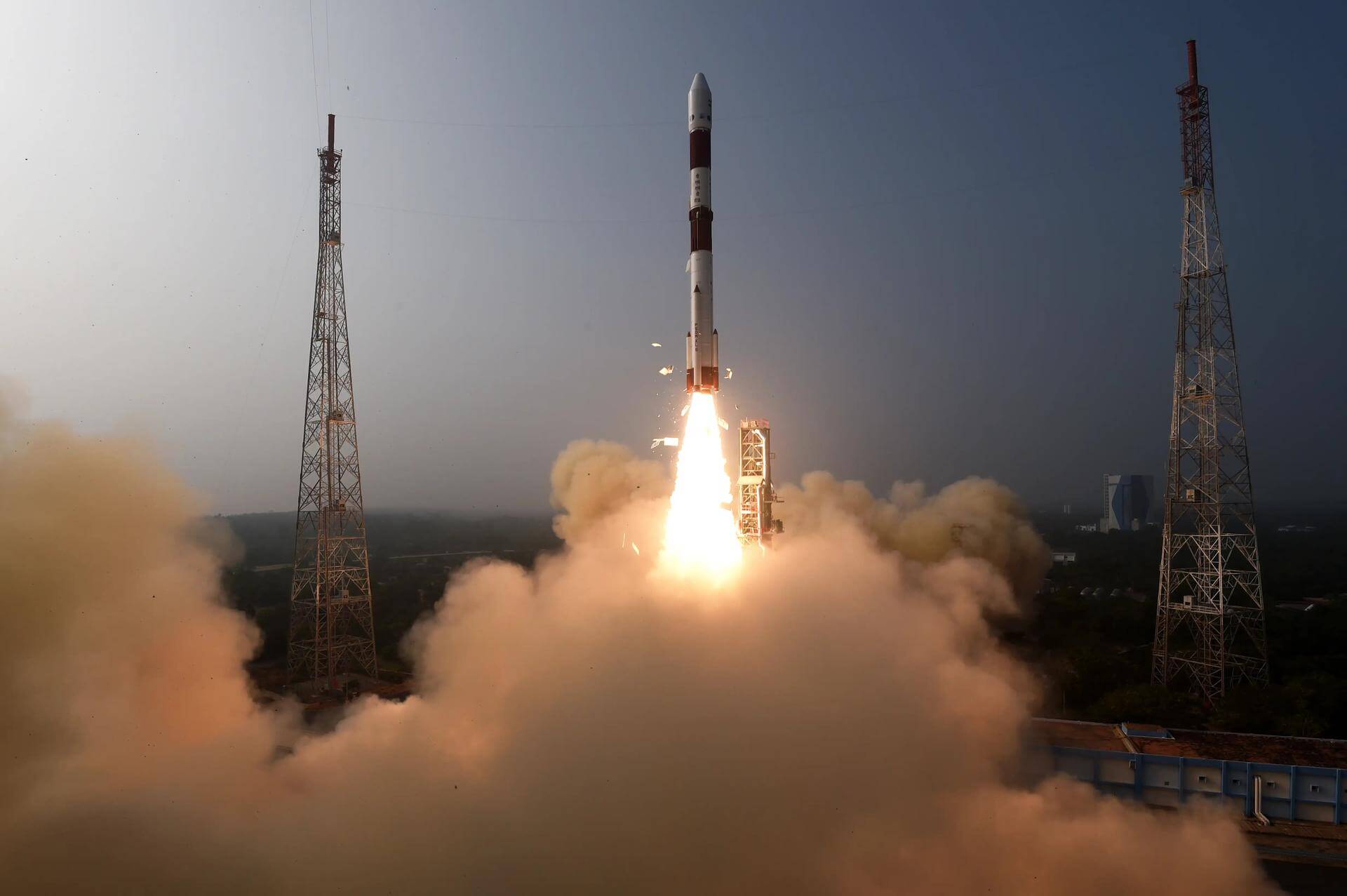
PSLV-DL | XPoSat
Indian Space Research Organization | IndiaSatish Dhawan Space Centre, India
Jan. 1, 2024, 3:40 a.m.
Status: Launch Successful
Mission:
XPoSat (X-ray Polarimeter Satellite) is India’s first dedicated polarimetry mission to study various dynamics of bright astronomical X-ray sources in extreme conditions. The spacecraft will carry two scientific payloads in a low earth orbit. The primary payload POLIX (Polarimeter Instrument in X-rays) will measure the polarimetry parameters (degree and angle of polarization) in medium X-ray energy range of 8-30 keV photons of astronomical origin. The XSPECT (X-ray Spectroscopy and Timing) payload will give spectroscopic information in the energy range of 0.8-15 keV. In addition, 10 attached payloads on the PSLV 4th stage will perform various experiments and testing from Indian institutions coordinated by ISRO, known as PSLV Orbital Experimental Module-3 (POEM-3).
Low Earth OrbitPSLV-DL | Amazonia 1 & 18 others
Indian Space Research Organization | IndiaSatish Dhawan Space Centre, India
Feb. 28, 2021, 4:54 a.m.
Status: Launch Successful
Mission:
Amazonia 1 is a Brazilian optical Earth observation satellite of the National Institute for Space Research (INPE). This satellite will further strengthen the existing structure by providing remote sensing data to users for monitoring deforestation in the Amazon region and analysis of diversified agriculture across the Brazilian territory. The 18 co-passenger satellites include four from IN-SPACe (three UNITYsats from consortium of three Indian academic institutes and One Satish Dhawan Sat from Space Kidz India) and 14 from NSIL.
Sun-Synchronous OrbitPSLV-DL | EOS-01 (RISAT-2BR2)
Indian Space Research Organization | IndiaSatish Dhawan Space Centre, India
Nov. 7, 2020, 9:41 a.m.
Status: Launch Successful
Mission:
EOS-1 (previously known as RISAT-2BR2) is an imaging mission of ISRO using an active SAR (Synthetic Aperture Radar) imager to provide continuity of service for RISAT-2. The objective of the RISAT mission is to use the all-weather as well as the day-and-night SAR observation capability in applications such as agriculture, forestry, soil moisture, geology, sea ice, coastal monitoring, object identification, and flood monitoring, but also for military surveillance. Flight also carries 9 rideshare payloads, including Lithuanian NanoAvionics R2 satellite - pathfinder for their M6P cubesat platform, 4 KSM satellites of Kleos Space for a maritime geolocation constellation, and 4 Lemur satellites for Spire.
Low Earth OrbitPSLV-DL | Microsat-R
Indian Space Research Organization | IndiaSatish Dhawan Space Centre, India
Jan. 24, 2019, 6:07 p.m.
Falcon 9
Starlink Group 17-35
Space Launch Complex 4E - Vandenberg SFB, CA, USAA batch of 25 satellites for the Starlink mega-constellation - SpaceX's project for space-based Internet communication system.
Atlas V 551
Amazon Leo (LA-05)
Space Launch Complex 41 - Cape Canaveral SFS, FL, USAAmazon Leo, formerly known as Project Kuiper, is a mega constellation of satellites in Low Earth Orbit that will offer broadband internet access, thi…
Soyuz 2.1a/Fregat-M
Meridian-M No.21L
43/3 (43L) - Plesetsk Cosmodrome, Russian FederationNote: Payload identity uncertain. Meridian is a series of communications satellite for military and civilian use.
Tianlong-3
Demo Flight
Tianlong-3 Launch Pad - Jiuquan Satellite Launch Center, People's Republic of ChinaFirst test launch of Space Pioneer’s Tianlong-3 rocket.
Falcon 9
Starlink Group 10-58
Space Launch Complex 40 - Cape Canaveral SFS, FL, USAA batch of 29 satellites for the Starlink mega-constellation - SpaceX's project for space-based Internet communication system.

